
Ruby:
Basic facts:
Month stone: July
Origin (most important): Afghanistan, Burma, India, Cambodia, Kenya, Madagascar, Mozambique, Sri Lanka, Tajikistan, Tanzania, Thailand and Vietnam.
Colors: Red (other corundum colors are classified as sapphire)
Family: Corundum: Al2O3
Hardness: 9
Refractive Index: 1.76 – 1.78
Specific Gravity: 3.97 – 4.05
Treatment: Often treated with heat/flux, but other types also occur to a lesser degree.
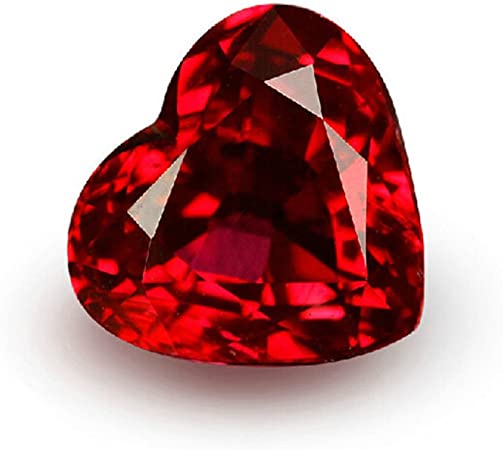
Ruby gets its name from the Latin word for red, Rufus. Ruby is the July stone of the month, the gemstone of Capricorn, and the traditional 15th and 40th anniversary gift.
Myths and Legends:
The historical mystery and beauty of rubies is as colorful as the legends surrounding this most precious stone.
The earliest record of the extraction of rubies is more than 2500 years ago in Sri Lanka, where it is called rathu kata. Sri Lankan rubies appeared in Western jewelry among the Etruscans (600-275 BC) and were used by the Greeks and Romans from about 480 BC. and forwards. For the past thousand years, the most valuable rubies have come from Burma (today known as Myanmar).
Prized throughout history, many believed that mystical powers lay hidden in this intense red gemstone. The fiery crimson red color of rubies has caused many civilizations to associate rubies with passion, love and romance. Rubies are also said to bestow wisdom, health and luck in games. According to oriental belief, ruby is the stone of the sun.
In Sanskrit texts it is mentioned that the ancient Hindus were so enchanted by the color of rubies that they called them ratnaraj - the king of precious stones. The ancient Hindus believed that the colors of rubies were due to an unquenchable fire burning within the stone that would provide the wearer with longevity and also cause water to boil.
Biblical references to ruby (all red gems were collectively called carbuncle at this time) call it a very precious treasure. In the King James Version of the Bible, the ruby (and its namesake carbuncle) is mentioned several times:
Exodus 28:17
'And thou shalt set in it settings of stones, even four rows of stones: the first row shall be a sardius, a topaz, and a carbuncle: this shall be the first row.'
Exodus 39:10
'And they set in it four rows of stones: the first row was a sardius, a topaz, and a carbuncle: this was the first row.'
Interestingly, the stones called rubies in the Old Testament may actually have been spinel or garnet. Until the 18th century, when chemical testing improved, most red gemstones were called rubies. In fact, many of the famous rubies in the crown jewels of Europe have since been identified as spinel or garnet. For example, the Black Princess Ruby that rests proudly in the center of the British Imperial State Crown is actually a red spinel.
for over 2,000 years Sri Lanka has supplied the world with fine star rubies. In fact, Sri Lanka was probably the original source of this gemstone. The ancient Sinhalese believed that a star ruby protected the wearer from sorcery. It was considered such a powerful talisman that even when the original owner gave the gem to someone else, they continued to receive protection. In Europe, star rubies were sometimes called "the three swords" and were said to ward off evil, bring good luck and help one find a good spouse.
Native Americans believed that offerings of a fine ruby resulted in rebirth as a powerful chief.
Some cultures believe the ruby's blood-like color would protect the wearer from harm. In fact, ancient Burmese warriors believed that when a ruby was inserted under the skin, a mystical power was generated, making them invincible in battle. Rubies were once known by the Burmese people as "blood drops from the heart of Mother Earth" and were worn by them as a talisman to protect against illness or misfortune.
In the 13th century, the famous explorer Marco Polo wrote that Kublai Khan, the Mongol emperor of China, once offered an entire city for a ruby the size of a man's finger.
During the Middle Ages, rubies were believed to contain prophetic powers. It was believed that a ruby could warn its owner of misfortune by deepening its color.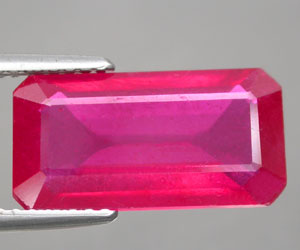
Ruby facts:
Apart from their color, rubies are identical to sapphires and consist of the mineral we call corundum. The name corrundum (corundum) is believed to come from 3 ancient Tamil, Hindi and Sanskrit words for rubies and sapphires, kurundam, kurund and kuruvinda.
Did you know that rubies are rarer than diamonds? In the last 60 years, hardly a month has passed without a new diamond mine being discovered. In contrast, rubies are only found in a handful of mines worldwide.
Did you know that rubies are more expensive than diamonds? A 16-carat ruby sold at Sotheby's in New York in October 1988 went for the staggering sum of US $3,630,000. Rubies are one of the world's most expensive jewels, but like all jewels, quality determines the price.
Second only to diamonds in hardness, rubies are one of the most durable gemstones. This, combined with the fact that rubies come in many different shapes and sizes, makes them perfect for all types of jewelry.
Color is the most important factor in evaluating rubies. While cut and size (fine rubies over two carats are very rare) are also important while clarity is secondary. Colored by chromium, rubies were formed millions of years ago deep within the earth. Extremely few rubies crystallize undisturbed, so a whole host of small irregularities (inclusions) is a hallmark of their formation. Far from being flaws, inclusions are a fascinating hallmark of authenticity that ties a ruby's natural relationship to the earth. Clarity is therefore less important in rubies than, for example, in sapphires.
Personal preference is of course subjective, but generally the best rubies have an intense, almost electric red effect in daylight due to fluorescence. The ideal ruby has an intense, rich crimson color without being too light or too dark. But since rubies come in many different colors and sizes, ultimately your personal preferences should be your primary concern. Remember, beauty is in the eye of the beholder.
Asterism or star effect is a reflective effect that appears as two or more intersecting bands of light across the surface of a stone. This rare phenomenon is found in both rubies and sapphires. Asterism in corundum is due to reflections from masses of exsolved needle inclusions (silk), which in most varieties consist of rutile.
Burma continues to produce some of the world's finest rubies. While the original location of the ruby was most likely Sri Lanka (Ceylon), the classic source is the Mogok Sten Tract in Upper Burma. So much so that one of the recognized titles of the King of Burma was "Ruler of Rubies."
Burmese rubies come from the Mogok Valley in northern and central Burma and Mong Hsu in northeastern Burma (pronounced "Mong shu").
Mong Hsu is located 225km southeast of Mogok, between the Nam Pang and Salween rivers. Closed to foreigners, the road is so bad that it takes about 14 hours to travel there from the nearest town of Taunggyi.
Ruby mining in Burma was originally limited to alluvial deposits, but now marble is also mined in the surrounding mountains. Millions of years of weathering freed rubies from their bedrock to slowly bring them down from the mountains to the valley floor, where the rubies became stuck to the bottom of streams and rivers. It is from these ancient alluvial river gravels that the majority of rubies have been found.
Most Malagasy rubies are mined from a relatively new mine that opened in July 2004, deep in an impenetrable jungle. The only way to reach the ruby mines near the village of Moramanga is by helicopter or a grueling long day's hike on a muddy path through the dense mountainous rainforest from the Madagascar town of Andilamena. Most of the ruby from this mine is treated by filling cracks with high refractive index glass (flux treatment).
Another important mining region for rubies in Madagascar is Vatomandry. Stones from Vatomandry are often untreated and very rare.
Apart from Madagascar, rubies are found in India, Kenya, Mozambique, Sri Lanka, Tanzania, Tajikistan, Vietnam and of course Thailand. But most of the ruby mining in Thailand is over. However, small production still occurs, across the border to Cambodia, around the towns of Pailin and Samlot.
However, almost all the world's production of rubies passes through Thailand thanks to the large grinding industry that has existed there for decades.
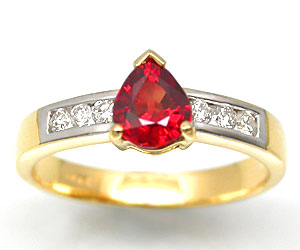
Basic facts:
Month stone: July
Origin (most important): Afghanistan, Burma, India, Cambodia, Kenya, Madagascar, Mozambique, Sri Lanka, Tajikistan, Tanzania, Thailand and Vietnam.
Colors: Red (other corundum colors are classified as sapphire)
Family: Corundum: Al2O3
Hardness: 9
Refractive Index: 1.76 – 1.78
Specific Gravity: 3.97 – 4.05
Treatment: Often treated with heat/flux, but other types also occur to a lesser degree.
Ruby gets its name from the Latin word for red, Rufus. Ruby is the July stone of the month, the gemstone of Capricorn, and the traditional 15th and 40th anniversary gift.
Myths and Legends:
The historical mystery and beauty of rubies is as colorful as the legends surrounding this most precious stone.
The earliest record of the extraction of rubies is more than 2500 years ago in Sri Lanka, where it is called rathu kata. Sri Lankan rubies appeared in Western jewelry among the Etruscans (600-275 BC) and were used by the Greeks and Romans from about 480 BC. and forwards. For the past thousand years, the most valuable rubies have come from Burma (today known as Myanmar).
Prized throughout history, many believed that mystical powers lay hidden in this intense red gemstone. The fiery crimson red color of rubies has caused many civilizations to associate rubies with passion, love and romance. Rubies are also said to bestow wisdom, health and luck in games. According to oriental belief, ruby is the stone of the sun.
In Sanskrit texts it is mentioned that the ancient Hindus were so enchanted by the color of rubies that they called them ratnaraj - the king of precious stones. The ancient Hindus believed that the colors of rubies were due to an unquenchable fire burning within the stone that would provide the wearer with longevity and also cause water to boil.
Biblical references to ruby (all red gems were collectively called carbuncle at this time) call it a very precious treasure. In the King James Version of the Bible, the ruby (and its namesake carbuncle) is mentioned several times:
Exodus 28:17
'And thou shalt set in it settings of stones, even four rows of stones: the first row shall be a sardius, a topaz, and a carbuncle: this shall be the first row.'
Exodus 39:10
'And they set in it four rows of stones: the first row was a sardius, a topaz, and a carbuncle: this was the first row.'
Interestingly, the stones called rubies in the Old Testament may actually have been spinel or garnet. Until the 18th century, when chemical testing improved, most red gemstones were called rubies. In fact, many of the famous rubies in the crown jewels of Europe have since been identified as spinel or garnet. For example, the Black Princess Ruby that rests proudly in the center of the British Imperial State Crown is actually a red spinel.
for over 2,000 years Sri Lanka has supplied the world with fine star rubies. In fact, Sri Lanka was probably the original source of this gemstone. The ancient Sinhalese believed that a star ruby protected the wearer from sorcery. It was considered such a powerful talisman that even when the original owner gave the gem to someone else, they continued to receive protection. In Europe, star rubies were sometimes called "the three swords" and were said to ward off evil, bring good luck and help one find a good spouse.
Native Americans believed that offerings of a fine ruby resulted in rebirth as a powerful chief.
Some cultures believe the ruby's blood-like color would protect the wearer from harm. In fact, ancient Burmese warriors believed that when a ruby was inserted under the skin, a mystical power was generated, making them invincible in battle. Rubies were once known by the Burmese people as "blood drops from the heart of Mother Earth" and were worn by them as a talisman to protect against illness or misfortune.
In the 13th century, the famous explorer Marco Polo wrote that Kublai Khan, the Mongol emperor of China, once offered an entire city for a ruby the size of a man's finger.
During the Middle Ages, rubies were believed to contain prophetic powers. It was believed that a ruby could warn its owner of misfortune by deepening its color.
Ruby facts:
Apart from their color, rubies are identical to sapphires and consist of the mineral we call corundum. The name corrundum (corundum) is believed to come from 3 ancient Tamil, Hindi and Sanskrit words for rubies and sapphires, kurundam, kurund and kuruvinda.
Did you know that rubies are rarer than diamonds? In the last 60 years, hardly a month has passed without a new diamond mine being discovered. In contrast, rubies are only found in a handful of mines worldwide.
Did you know that rubies are more expensive than diamonds? A 16-carat ruby sold at Sotheby's in New York in October 1988 went for the staggering sum of US $3,630,000. Rubies are one of the world's most expensive jewels, but like all jewels, quality determines the price.
Second only to diamonds in hardness, rubies are one of the most durable gemstones. This, combined with the fact that rubies come in many different shapes and sizes, makes them perfect for all types of jewelry.
Color is the most important factor in evaluating rubies. While cut and size (fine rubies over two carats are very rare) are also important while clarity is secondary. Colored by chromium, rubies were formed millions of years ago deep within the earth. Extremely few rubies crystallize undisturbed, so a whole host of small irregularities (inclusions) is a hallmark of their formation. Far from being flaws, inclusions are a fascinating hallmark of authenticity that ties a ruby's natural relationship to the earth. Clarity is therefore less important in rubies than, for example, in sapphires.
Personal preference is of course subjective, but generally the best rubies have an intense, almost electric red effect in daylight due to fluorescence. The ideal ruby has an intense, rich crimson color without being too light or too dark. But since rubies come in many different colors and sizes, ultimately your personal preferences should be your primary concern. Remember, beauty is in the eye of the beholder.
Asterism or star effect is a reflective effect that appears as two or more intersecting bands of light across the surface of a stone. This rare phenomenon is found in both rubies and sapphires. Asterism in corundum is due to reflections from masses of exsolved needle inclusions (silk), which in most varieties consist of rutile.
Burma continues to produce some of the world's finest rubies. While the original location of the ruby was most likely Sri Lanka (Ceylon), the classic source is the Mogok Sten Tract in Upper Burma. So much so that one of the recognized titles of the King of Burma was "Ruler of Rubies."
Burmese rubies come from the Mogok Valley in northern and central Burma and Mong Hsu in northeastern Burma (pronounced "Mong shu").
Mong Hsu is located 225km southeast of Mogok, between the Nam Pang and Salween rivers. Closed to foreigners, the road is so bad that it takes about 14 hours to travel there from the nearest town of Taunggyi.
Ruby mining in Burma was originally limited to alluvial deposits, but now marble is also mined in the surrounding mountains. Millions of years of weathering freed rubies from their bedrock to slowly bring them down from the mountains to the valley floor, where the rubies became stuck to the bottom of streams and rivers. It is from these ancient alluvial river gravels that the majority of rubies have been found.
Most Malagasy rubies are mined from a relatively new mine that opened in July 2004, deep in an impenetrable jungle. The only way to reach the ruby mines near the village of Moramanga is by helicopter or a grueling long day's hike on a muddy path through the dense mountainous rainforest from the Madagascar town of Andilamena. Most of the ruby from this mine is treated by filling cracks with high refractive index glass (flux treatment).
Another important mining region for rubies in Madagascar is Vatomandry. Stones from Vatomandry are often untreated and very rare.
Apart from Madagascar, rubies are found in India, Kenya, Mozambique, Sri Lanka, Tanzania, Tajikistan, Vietnam and of course Thailand. But most of the ruby mining in Thailand is over. However, small production still occurs, across the border to Cambodia, around the towns of Pailin and Samlot.
However, almost all the world's production of rubies passes through Thailand thanks to the large grinding industry that has existed there for decades.