
Diamond:
Basic facts:
Month stone: April
Origin (most important): Africa, Australia, Canada, Russia
Colors: From classic white to rare red
Family: Kol
Hardness: 10
Refractive Index: 2.41 – 2.42
Specific Gravity: 3.53
Treatment: Can be treated with, among other things, irradiation (heat), laser filling and also other types that occur to a lesser degree.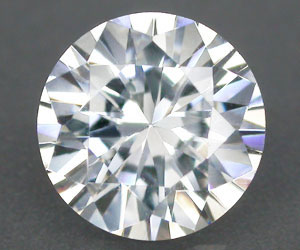
The word diamond comes from the Greek word adamas which means unsurpassed. Marilyn Monroe once said that diamonds are a girl's best friend. Over the last hundred years this has been true as diamond has become the most sought after gemstone of all.
Myths and Legends:
There are a variety of myths and legends about diamonds. The Hindus believed that diamonds were created when lightning struck rocks. The Romans wore diamonds because they believed they had magical powers that could protect them on the battlefield.
Until the 14th century, only royalty were allowed to wear diamonds. During the 14th century, diamonds began to be seen included in jewelry in Europe, especially small diamonds as side stones. However, larger diamonds were still reserved for royalty and extremely wealthy families. As an example, the Imperial Crown of the Russian Tsarina Catherine the Second (1729-1796) had a whopping 4936 diamonds included!
For the grading/valuation of gemstones, 4 grading points are usually used, called the 4 C's. For other gemstones, origin often plays a large role in relation to the value of the stone, but with diamonds, the 4 C's are strictly used (stands for Cut/grinding, Color /colour, Clarity and Carat weight).
Color:
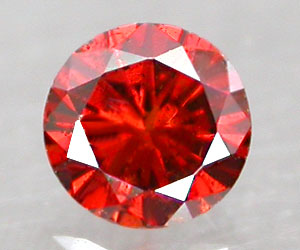
Completely colorless diamonds are extremely rare, beautiful and highly sought after by collectors. To the untrained eye, most diamonds appear white, but there are some degrees of whiteness.
Diamond Color Scale:
D-E (River) - Very rare white color.
F-G (Top Wesselton) - Rare white.
H (Wesselton) - White.
I (Top Crystal) - Very lightly tinted white.
J (Crystal) - Lightly tinted white.
K-L (Top Cape) - Tinted white.
M-N (Cape) - Light yellowish.
Clarity:
Inclusions are a natural phenomenon inside the diamond. Virtually all diamonds have some type of inclusions. Most of the time, these inclusions cannot be seen with the naked eye and must be assisted by a microscope or magnifying glass. The clarity scale for diamonds is as follows.
IF (Internally Flawless) - These stones are free of inclusions under 10x magnification.
VVS1-VVS2 (Very, Very Slightly Included) - Extremely few inclusions can possibly be seen under 10x magnification.
VS1-VS2 (Very Slightly Included) - Very few inclusions that can be seen under 10x magnification.
SI1-SI3 (Slightly Included) - Few inclusions that can be seen under 10x magnification.
I1-I2 (Included) - These stones have inclusions that are easily seen under 10x magnification.
PK (Pique) - These stones have inclusions that can be easily seen with the naked eye.
Grinding (cut):
Around 80% of all diamonds in the world are round cut, but despite this there are a lot of other beautiful diamond cuts. The 8 most popular diamond cuts are round, emerald cut, heart cut, hub cut, oval cut, drop cut, princess cut and radiant cut.
Unlike other gemstones, diamonds are cut, shaped and proportioned to a remarkably uniform ideal. The Russian mathematical genius Marcel Tolkowsky (his family was very big in the diamond trade) published in 1919 his interpretation of what proportions resulted in the best brilliance and luster of a diamond.
Carat weight:
Diamonds are almost always cut according to the same uniform ideal, which means that you can easily equate the carat weight with a diamond's millimeter size. An example can be seen below for round diamonds.
Size: Normal Weight:
1 mm 0.01 carat
2 mm 0.03 carat
3 mm 0.10 carat
4 mm 0.25 carat
5 mm 0.50 carat
6 mm 0.75 carat
6.5 mm 1.00 carat
7 mm 1.25 carat
7.5 mm 1.65 carat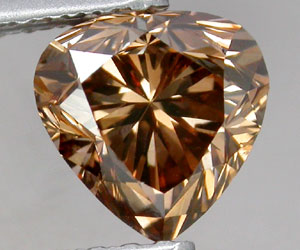
Fancy Colored Diamonds:
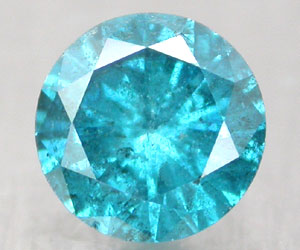
Most of us think of white color when we mention diamonds but there are actually quite a few very beautiful so called fancy colored diamonds. These are available in a range of different colors such as champagne, blue, yellow, pink, black, red, green and more. Most fancy colored diamonds are treated (often with irradiation). This type of treatment replicates the natural process (which in the earth takes several million years). The fancy colored diamonds that are all natural/untreated are very rare and thus valuable. These types of diamonds are actually significantly more valuable than a similar white (weight/clarity) diamond is.
Basic facts:
Month stone: April
Origin (most important): Africa, Australia, Canada, Russia
Colors: From classic white to rare red
Family: Kol
Hardness: 10
Refractive Index: 2.41 – 2.42
Specific Gravity: 3.53
Treatment: Can be treated with, among other things, irradiation (heat), laser filling and also other types that occur to a lesser degree.
The word diamond comes from the Greek word adamas which means unsurpassed. Marilyn Monroe once said that diamonds are a girl's best friend. Over the last hundred years this has been true as diamond has become the most sought after gemstone of all.
Myths and Legends:
There are a variety of myths and legends about diamonds. The Hindus believed that diamonds were created when lightning struck rocks. The Romans wore diamonds because they believed they had magical powers that could protect them on the battlefield.
Until the 14th century, only royalty were allowed to wear diamonds. During the 14th century, diamonds began to be seen included in jewelry in Europe, especially small diamonds as side stones. However, larger diamonds were still reserved for royalty and extremely wealthy families. As an example, the Imperial Crown of the Russian Tsarina Catherine the Second (1729-1796) had a whopping 4936 diamonds included!
For the grading/valuation of gemstones, 4 grading points are usually used, called the 4 C's. For other gemstones, origin often plays a large role in relation to the value of the stone, but with diamonds, the 4 C's are strictly used (stands for Cut/grinding, Color /colour, Clarity and Carat weight).
Color:
Completely colorless diamonds are extremely rare, beautiful and highly sought after by collectors. To the untrained eye, most diamonds appear white, but there are some degrees of whiteness.
Diamond Color Scale:
D-E (River) - Very rare white color.
F-G (Top Wesselton) - Rare white.
H (Wesselton) - White.
I (Top Crystal) - Very lightly tinted white.
J (Crystal) - Lightly tinted white.
K-L (Top Cape) - Tinted white.
M-N (Cape) - Light yellowish.
Clarity:
Inclusions are a natural phenomenon inside the diamond. Virtually all diamonds have some type of inclusions. Most of the time, these inclusions cannot be seen with the naked eye and must be assisted by a microscope or magnifying glass. The clarity scale for diamonds is as follows.
IF (Internally Flawless) - These stones are free of inclusions under 10x magnification.
VVS1-VVS2 (Very, Very Slightly Included) - Extremely few inclusions can possibly be seen under 10x magnification.
VS1-VS2 (Very Slightly Included) - Very few inclusions that can be seen under 10x magnification.
SI1-SI3 (Slightly Included) - Few inclusions that can be seen under 10x magnification.
I1-I2 (Included) - These stones have inclusions that are easily seen under 10x magnification.
PK (Pique) - These stones have inclusions that can be easily seen with the naked eye.
Grinding (cut):
Around 80% of all diamonds in the world are round cut, but despite this there are a lot of other beautiful diamond cuts. The 8 most popular diamond cuts are round, emerald cut, heart cut, hub cut, oval cut, drop cut, princess cut and radiant cut.
Unlike other gemstones, diamonds are cut, shaped and proportioned to a remarkably uniform ideal. The Russian mathematical genius Marcel Tolkowsky (his family was very big in the diamond trade) published in 1919 his interpretation of what proportions resulted in the best brilliance and luster of a diamond.
Carat weight:
Diamonds are almost always cut according to the same uniform ideal, which means that you can easily equate the carat weight with a diamond's millimeter size. An example can be seen below for round diamonds.
Size: Normal Weight:
1 mm 0.01 carat
2 mm 0.03 carat
3 mm 0.10 carat
4 mm 0.25 carat
5 mm 0.50 carat
6 mm 0.75 carat
6.5 mm 1.00 carat
7 mm 1.25 carat
7.5 mm 1.65 carat
Fancy Colored Diamonds:
Most of us think of white color when we mention diamonds but there are actually quite a few very beautiful so called fancy colored diamonds. These are available in a range of different colors such as champagne, blue, yellow, pink, black, red, green and more. Most fancy colored diamonds are treated (often with irradiation). This type of treatment replicates the natural process (which in the earth takes several million years). The fancy colored diamonds that are all natural/untreated are very rare and thus valuable. These types of diamonds are actually significantly more valuable than a similar white (weight/clarity) diamond is.