
Tanzanite:
Basic facts:
Month stone: December
Origin: Tanzania
Colors: Blue, purple, red, green
Family: Zoisite Ca2Al3Si3O12(OH)
Hardness: 6.5 - 7
Refractive Index: 1.69 – 1.70
Specific Gravity: 3.35
Treatment: Heat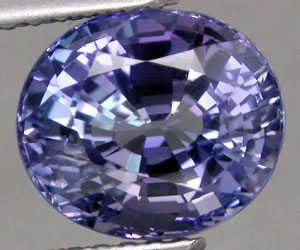
Demand for tanzanite has exploded in recent years, outselling all other colored gemstones, with the exception of sapphire.
Legend and myths
Tanzanite may not have the same myths and legends as, for example, sapphire, considering that tanzanite was only discovered 40 years ago. Named after Czechoslovak Baron Zois von Edelstein, zoisite (tanzanite's mineralogical name) never really became popular with gemstone lovers. Some translucent pink and apple green varieties were used in jewelry, but these could never make zoisite hugely popular. All this changed in 1967 on the arid lands around Mount Kilimanjaro in Merelani, Tanzania. Legend has it that a short-lived grass fire caused by a lightning strike was the catalyst that changed zoisite stones from a dull green/brown color to wine red, violet blue stones. The stones were discovered by Tanzania's nomadic Masai people.
The story of the Tanzanite discovery is as fascinating as the gemstone itself. Although it is not known exactly who first found tanzanite, the most credible is Ndugu Jumanne Ngoma, who found blue crystals while hiking through the Merelani Hills at the foot of Mount Kilimanjaro. Another story is that a local tribesman (Ali Juuyawatu) found a transparent tanzanite crystal. He shared his find with a local prospector Manuel D'Souza. D'Souza was actually prospecting for rubies in the region and initially thought he had discovered a new source of sapphires. However, it quickly became apparent that its true identity was tanzanite.
Did you know that tsavorite garnet was actually first discovered during a tanzanite prospecting trip by the legendary Scottish geologist, Campbell R. Bridges, in 1967? Bridges worked for Tiffany & Co and was the first person to get tanzanite to the US for identification by the GIA (Gemological Institute of America) Gem Trade Laboratory. Tanzanite quickly found its way to American jewelers as well as the world-renowned New York-based jeweler Tiffany & Co.
Henry B. Platt, great-grandson of Louis Comfort Tiffany, and later CEO and chairman of Tiffany & Co. was immediately enamored by its beauty, but did not like its gemological name blue zoisite. To him, the name sounded like blue suicide. As with most things, the name is incredibly important so this rare and exotic African gemstone was quickly renamed tanzanite. At Tanzanite's official launch in October 1968, Platt remarked that it "was the most beautiful blue gemstone discovered in over 2,000 years." Tanzanite stones immediately became popular around the world and the demand for Tanzanite jewelry grew dramatically (until 1998 and 1999, tanzanite was declared the world's best-selling colored gemstone). Today, the demand for tanzanite continues, and tanzanite sales outstrip all other colored gemstones, with the exception of sapphire.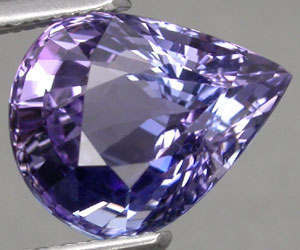
An acknowledgment of its popularity was in 2002 when tanzanite was added to the jewelry industry's official stone of the month list. This saw tanzanite along with turquoise and zircon being the accepted month stones for December. No small feat, especially considering this was the first time the list had changed since 1912.
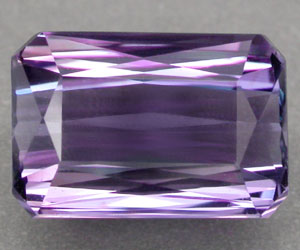
A key ingredient in tanzanite's success is that it exhibits more shades of blue than a clear midnight sky due to a phenomenon known as Pleochroism, where different colors can be seen in different directions of the gemstone. Tanzanite is extremely light sensitive, and often exhibits a color shift from several bluish shades in daylight, to pinkish violets in incandescent lighting (candlelight). While the best examples show an intense blue under all types of light, most of the time you can actually see both colors at the same time.
Tanzanite crystals are often found with few inclusions, and one should preferably choose a stone that is at least eye clean (no visible inclusions when the stone is examined approximately 15 cm from the naked eye).
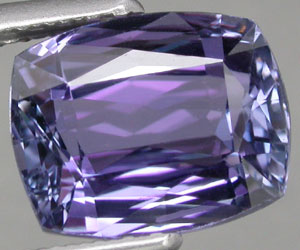
Tanzanite comes in a variety of shapes and cuts. Oval and pillow shaped are the most common, but round and other shapes can also be found. Regardless of the shape, you must choose a stone with good brilliance. While intense blue colors are preferred, overly large or poorly cut stones can lose their brilliance, making them appear dark. Tanzanite can sometimes occur in very large sizes, but the most popular sizes for jewelry are under 20 carats.
Tanzanite is only found in one place in the world (Merelani, Tanzania), which helps make tanzanite so sought after due to its rarity.
The area where tanzanite is found covers just under 13 square km and the area is divided into four blocks by the Government of Tanzania - Blocks A to D. Block D simply refers to the area from which the material is mined. Traditionally, larger quantities of the best material available have been found in Block D so the term became synonymous with the highest quality (D block Tanzanite). However, fine tanzanite comes from all blocks. Even at the largest and most sophisticated mine in operation in Block C, the yield of raw tanzanite crystals averages only 22 carats (4.4 grams) per ton processed. Tanzanite production has slowly but surely declined and many experts believe that tanzanite will disappear in the coming years.
Although there are several tanzanite grading systems, all are mainly about judging color quality. Traditionally, miners describe the finest, most colorful stones as AAA.
Compared to ruby, sapphire and emerald, tanzanite is usually free of inclusions, making color the single most important evaluation factor.
Basic facts:
Month stone: December
Origin: Tanzania
Colors: Blue, purple, red, green
Family: Zoisite Ca2Al3Si3O12(OH)
Hardness: 6.5 - 7
Refractive Index: 1.69 – 1.70
Specific Gravity: 3.35
Treatment: Heat
Demand for tanzanite has exploded in recent years, outselling all other colored gemstones, with the exception of sapphire.
Legend and myths
Tanzanite may not have the same myths and legends as, for example, sapphire, considering that tanzanite was only discovered 40 years ago. Named after Czechoslovak Baron Zois von Edelstein, zoisite (tanzanite's mineralogical name) never really became popular with gemstone lovers. Some translucent pink and apple green varieties were used in jewelry, but these could never make zoisite hugely popular. All this changed in 1967 on the arid lands around Mount Kilimanjaro in Merelani, Tanzania. Legend has it that a short-lived grass fire caused by a lightning strike was the catalyst that changed zoisite stones from a dull green/brown color to wine red, violet blue stones. The stones were discovered by Tanzania's nomadic Masai people.
The story of the Tanzanite discovery is as fascinating as the gemstone itself. Although it is not known exactly who first found tanzanite, the most credible is Ndugu Jumanne Ngoma, who found blue crystals while hiking through the Merelani Hills at the foot of Mount Kilimanjaro. Another story is that a local tribesman (Ali Juuyawatu) found a transparent tanzanite crystal. He shared his find with a local prospector Manuel D'Souza. D'Souza was actually prospecting for rubies in the region and initially thought he had discovered a new source of sapphires. However, it quickly became apparent that its true identity was tanzanite.
Did you know that tsavorite garnet was actually first discovered during a tanzanite prospecting trip by the legendary Scottish geologist, Campbell R. Bridges, in 1967? Bridges worked for Tiffany & Co and was the first person to get tanzanite to the US for identification by the GIA (Gemological Institute of America) Gem Trade Laboratory. Tanzanite quickly found its way to American jewelers as well as the world-renowned New York-based jeweler Tiffany & Co.
Henry B. Platt, great-grandson of Louis Comfort Tiffany, and later CEO and chairman of Tiffany & Co. was immediately enamored by its beauty, but did not like its gemological name blue zoisite. To him, the name sounded like blue suicide. As with most things, the name is incredibly important so this rare and exotic African gemstone was quickly renamed tanzanite. At Tanzanite's official launch in October 1968, Platt remarked that it "was the most beautiful blue gemstone discovered in over 2,000 years." Tanzanite stones immediately became popular around the world and the demand for Tanzanite jewelry grew dramatically (until 1998 and 1999, tanzanite was declared the world's best-selling colored gemstone). Today, the demand for tanzanite continues, and tanzanite sales outstrip all other colored gemstones, with the exception of sapphire.
An acknowledgment of its popularity was in 2002 when tanzanite was added to the jewelry industry's official stone of the month list. This saw tanzanite along with turquoise and zircon being the accepted month stones for December. No small feat, especially considering this was the first time the list had changed since 1912.
A key ingredient in tanzanite's success is that it exhibits more shades of blue than a clear midnight sky due to a phenomenon known as Pleochroism, where different colors can be seen in different directions of the gemstone. Tanzanite is extremely light sensitive, and often exhibits a color shift from several bluish shades in daylight, to pinkish violets in incandescent lighting (candlelight). While the best examples show an intense blue under all types of light, most of the time you can actually see both colors at the same time.
Tanzanite crystals are often found with few inclusions, and one should preferably choose a stone that is at least eye clean (no visible inclusions when the stone is examined approximately 15 cm from the naked eye).
Tanzanite comes in a variety of shapes and cuts. Oval and pillow shaped are the most common, but round and other shapes can also be found. Regardless of the shape, you must choose a stone with good brilliance. While intense blue colors are preferred, overly large or poorly cut stones can lose their brilliance, making them appear dark. Tanzanite can sometimes occur in very large sizes, but the most popular sizes for jewelry are under 20 carats.
Tanzanite is only found in one place in the world (Merelani, Tanzania), which helps make tanzanite so sought after due to its rarity.
The area where tanzanite is found covers just under 13 square km and the area is divided into four blocks by the Government of Tanzania - Blocks A to D. Block D simply refers to the area from which the material is mined. Traditionally, larger quantities of the best material available have been found in Block D so the term became synonymous with the highest quality (D block Tanzanite). However, fine tanzanite comes from all blocks. Even at the largest and most sophisticated mine in operation in Block C, the yield of raw tanzanite crystals averages only 22 carats (4.4 grams) per ton processed. Tanzanite production has slowly but surely declined and many experts believe that tanzanite will disappear in the coming years.
Although there are several tanzanite grading systems, all are mainly about judging color quality. Traditionally, miners describe the finest, most colorful stones as AAA.
Compared to ruby, sapphire and emerald, tanzanite is usually free of inclusions, making color the single most important evaluation factor.