
Peridot:
Basic facts:
Month stone: August
Origin: Burma, Kenya, China, Pakistan, USA & Vietnam
Colors: Green to green/yellow
Family: Olivine: (Mg2Fe2)SiO4
Hardness: 6.5 – 7
Refractive Index: 1.65 – 1.70
Specific Gravity: 3.28 – 3.48
Treatment: Not treated
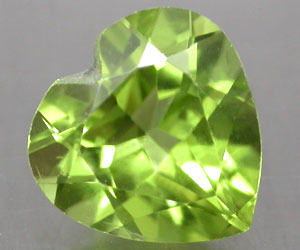
Peridot was called the "gem of the sun" by the ancient Egyptians and the "emerald of the evening" by the Romans. Peridot was a favorite gemstone of Cleopatra and was historically often mistaken for emerald.
The origin of Peridot's name is uncertain, but several theories exist. Some sources speculate that it comes from the 13th century Middle Eastern English word peridot, meaning "point of light" or "light button" an apt description for this gemstone given its brilliance. Other sources attribute it to French peritot, meaning "unclear", probably because of its silky appearance. Considering how long peridot has been around, the most likely candidate is the Arabic word faridat, which simply means "precious stone."
Myths and legends
Popular in Greek and Roman jewelry, peridot has been sought after since 1500 BC. when the Egyptians began mining on the island of Zeberget, later known as St Johns Island, about 8 miles from the Egyptian coast in the Red Sea. Interestingly, Zabargad is the Arabic word for peridot.
Peridot mining was traditionally done at night when this gemstone's natural glow made it easier to spot. The ancient Egyptians also believed that peridot became invisible under the sun's rays. They also believed that peridot was colored by the golden shimmer of their sun god Ra, and was thus a powerful protector from harm.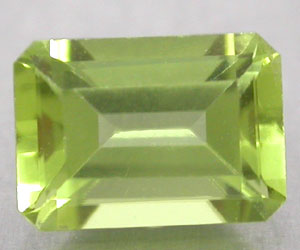
Powdered peridot has been used to cure asthma and a peridot placed under the tongue of someone with a high fever is believed to help.
Perhaps the most unusual peridot are those that come from meteorites called pallasites, after their 1772 discoverer, a German scientist named Peter Simon Pallas. Some are even multi-faceted and are included in jewelry, one of the few extraterrestrial gems known to man. In 2003, peridot was discovered on Mars, making it the first gemstone to be discovered on another planet.
Peridot facts
Peridot is a variant of olivine and has colors that vary from golden lime green to rich grass green. Traditionally, the most sought-after color shades have been rich grass greens.
While Arizona's San Carlos Apache Reservation has the world's largest Peridot gemstone deposit, China has recently become a major producer. In 1994 a new deposit was discovered in Pakistan, producing some of the finest peridot we have ever seen. The new mine is located 15,000 meters above sea level in the Nanga Parbat region far west of the Himalayan mountains in the Pakistani part of Kashmir.
Some of the world's finest peridots come from Pyaung Gaung, in the northern part of Burma's Mogok region.
Basic facts:
Month stone: August
Origin: Burma, Kenya, China, Pakistan, USA & Vietnam
Colors: Green to green/yellow
Family: Olivine: (Mg2Fe2)SiO4
Hardness: 6.5 – 7
Refractive Index: 1.65 – 1.70
Specific Gravity: 3.28 – 3.48
Treatment: Not treated
Peridot was called the "gem of the sun" by the ancient Egyptians and the "emerald of the evening" by the Romans. Peridot was a favorite gemstone of Cleopatra and was historically often mistaken for emerald.
The origin of Peridot's name is uncertain, but several theories exist. Some sources speculate that it comes from the 13th century Middle Eastern English word peridot, meaning "point of light" or "light button" an apt description for this gemstone given its brilliance. Other sources attribute it to French peritot, meaning "unclear", probably because of its silky appearance. Considering how long peridot has been around, the most likely candidate is the Arabic word faridat, which simply means "precious stone."
Myths and legends
Popular in Greek and Roman jewelry, peridot has been sought after since 1500 BC. when the Egyptians began mining on the island of Zeberget, later known as St Johns Island, about 8 miles from the Egyptian coast in the Red Sea. Interestingly, Zabargad is the Arabic word for peridot.
Peridot mining was traditionally done at night when this gemstone's natural glow made it easier to spot. The ancient Egyptians also believed that peridot became invisible under the sun's rays. They also believed that peridot was colored by the golden shimmer of their sun god Ra, and was thus a powerful protector from harm.
Powdered peridot has been used to cure asthma and a peridot placed under the tongue of someone with a high fever is believed to help.
Perhaps the most unusual peridot are those that come from meteorites called pallasites, after their 1772 discoverer, a German scientist named Peter Simon Pallas. Some are even multi-faceted and are included in jewelry, one of the few extraterrestrial gems known to man. In 2003, peridot was discovered on Mars, making it the first gemstone to be discovered on another planet.
Peridot facts
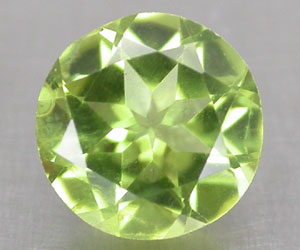
Peridot is a variant of olivine and has colors that vary from golden lime green to rich grass green. Traditionally, the most sought-after color shades have been rich grass greens.
While Arizona's San Carlos Apache Reservation has the world's largest Peridot gemstone deposit, China has recently become a major producer. In 1994 a new deposit was discovered in Pakistan, producing some of the finest peridot we have ever seen. The new mine is located 15,000 meters above sea level in the Nanga Parbat region far west of the Himalayan mountains in the Pakistani part of Kashmir.
Some of the world's finest peridots come from Pyaung Gaung, in the northern part of Burma's Mogok region.