
Rubelite:
Basic facts:
Month stone: October
Origin: Afghanistan, Brazil, Kenya, Madagascar, Mozambique, Nigeria, Sri Lanka, Tanzania, Zambia & USA
Colors: Various
Family: Tourmaline
Hardness: 7 – 7.5
Refractive Index: 1.61 – 1.66
Specific Gravity: 2.82 – 3.32
Treatment: Usually not treated
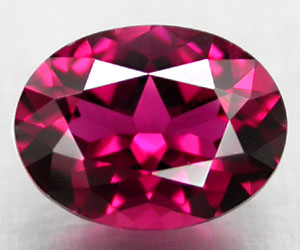
Tourmaline has a colorful and romantic history and comes in an incredible array of beautiful colors. Tourmaline is found in a palette of over 100 different shades, and is one of the world's most diverse gemstones. This has resulted in the nickname "chameleon gem", which is doubly appropriate when you consider that a major source of tourmaline is Madagascar, home to more than half of the world's chameleon species.
The name tourmaline comes from the Sinhalese word tourmali (to mix), due to a historical tendency for tourmaline to be mixed and mistaken for other gemstone varieties.
Tourmaline facts
Due to their crystal size, tourmalines are often cut into long rectangular shapes along the crystal axis.
Tourmaline crystals occur in granitic pegmatite veins in the large gemstone districts in eg Minas Gerais in Brazil, San Diego County in the USA, and the East African countries of Kenya, Tanzania, Mozambique, Malawi, Madagascar and Nigeria.
Tourmaline is a group of mineral species. But it is the mineral elbaite (named after the island of Elba off the nearby west coast of Italy, where it was discovered) that is responsible for almost all of tourmaline's most famous gemstone varieties.
Rubelite tourmaline
Rubelite, deriving its name from the Latin word rubellus, meaning "coming from red" is a lustrous, reddish pink and purple-toned tourmaline. During the 17th century, on behalf of the Tsar of Russia, many gemstone jewelry were designed for the Imperial Crown Court. However, gems originally thought to be rubies have later been found to be Rubelite.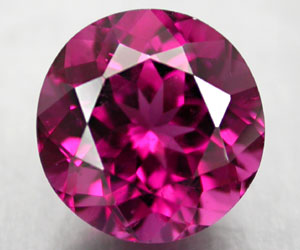
Extremely rare, rubelite has taken the jewelry world by storm in recent years following the discovery of new deposits. Madagascar rubelite comes from mines 4 miles outside the town of Betafo in Antananarivo province in Madagascar's central highlands. Interestingly, this mine produces some truly unique rubelites whose color is close to the famous rubies.
The largest rubelite finds are from the 19th century when they were discovered in Brazil. This country continues to be a major supplier, especially in the state of Minas Gerais. Some of the finest stones came from Ouro Fino in Coronel, Murta (Minas Gerais). Discovered around 1983 and already in 1985 the mine was developed. Ouro Fino rubellite has achieved legendary status in the gem world.
Surprisingly, Southern California's Pala District was also once an important source, especially in the late 19th and early 20th centuries. The blue-capped rubelite crystals from the tourmaline queen mine are world famous among mineral collectors.
In the summer of 1998, a new rubelite deposit was discovered in an agricultural area 4 miles from the ancient city of Ibadan in Nigeria, West Africa. This material was exceptionally clean with top color. Within just a few short years, over 1,000 kg of rough rock had been taken out of the ground, and just as quickly as it appeared, the mine was fully developed.
In 2007, another important find was made, this time near Chimoio, Mozambique (near the border with Zimbabwe).
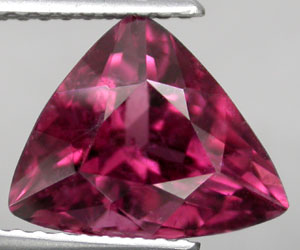
With the exception of ruby and red spinel, rubelite is the only gemstone that occurs in such a rich, dark red color. Like emerald, inclusions in rubelite are common. The chemical element that colors rubelite (manganese) actually causes the growing crystal to become internally impure (ie, the more manganese present, the darker the red color, and the more inclusions in the final crystal). It is therefore extremely rare to find a colorful rubelite that is internally clean. Rubelites also tend to have more natural inclusions, as they form near the center of the crystal pocket, and thus receive more stress and pressure during formation. However, rubellite is a very durable gemstone, well suited for everyday jewelry.
Basic facts:
Month stone: October
Origin: Afghanistan, Brazil, Kenya, Madagascar, Mozambique, Nigeria, Sri Lanka, Tanzania, Zambia & USA
Colors: Various
Family: Tourmaline
Hardness: 7 – 7.5
Refractive Index: 1.61 – 1.66
Specific Gravity: 2.82 – 3.32
Treatment: Usually not treated
Tourmaline has a colorful and romantic history and comes in an incredible array of beautiful colors. Tourmaline is found in a palette of over 100 different shades, and is one of the world's most diverse gemstones. This has resulted in the nickname "chameleon gem", which is doubly appropriate when you consider that a major source of tourmaline is Madagascar, home to more than half of the world's chameleon species.
The name tourmaline comes from the Sinhalese word tourmali (to mix), due to a historical tendency for tourmaline to be mixed and mistaken for other gemstone varieties.
Tourmaline facts
Due to their crystal size, tourmalines are often cut into long rectangular shapes along the crystal axis.
Tourmaline crystals occur in granitic pegmatite veins in the large gemstone districts in eg Minas Gerais in Brazil, San Diego County in the USA, and the East African countries of Kenya, Tanzania, Mozambique, Malawi, Madagascar and Nigeria.
Tourmaline is a group of mineral species. But it is the mineral elbaite (named after the island of Elba off the nearby west coast of Italy, where it was discovered) that is responsible for almost all of tourmaline's most famous gemstone varieties.
Rubelite tourmaline
Rubelite, deriving its name from the Latin word rubellus, meaning "coming from red" is a lustrous, reddish pink and purple-toned tourmaline. During the 17th century, on behalf of the Tsar of Russia, many gemstone jewelry were designed for the Imperial Crown Court. However, gems originally thought to be rubies have later been found to be Rubelite.
Extremely rare, rubelite has taken the jewelry world by storm in recent years following the discovery of new deposits. Madagascar rubelite comes from mines 4 miles outside the town of Betafo in Antananarivo province in Madagascar's central highlands. Interestingly, this mine produces some truly unique rubelites whose color is close to the famous rubies.
The largest rubelite finds are from the 19th century when they were discovered in Brazil. This country continues to be a major supplier, especially in the state of Minas Gerais. Some of the finest stones came from Ouro Fino in Coronel, Murta (Minas Gerais). Discovered around 1983 and already in 1985 the mine was developed. Ouro Fino rubellite has achieved legendary status in the gem world.
Surprisingly, Southern California's Pala District was also once an important source, especially in the late 19th and early 20th centuries. The blue-capped rubelite crystals from the tourmaline queen mine are world famous among mineral collectors.
In the summer of 1998, a new rubelite deposit was discovered in an agricultural area 4 miles from the ancient city of Ibadan in Nigeria, West Africa. This material was exceptionally clean with top color. Within just a few short years, over 1,000 kg of rough rock had been taken out of the ground, and just as quickly as it appeared, the mine was fully developed.
In 2007, another important find was made, this time near Chimoio, Mozambique (near the border with Zimbabwe).
With the exception of ruby and red spinel, rubelite is the only gemstone that occurs in such a rich, dark red color. Like emerald, inclusions in rubelite are common. The chemical element that colors rubelite (manganese) actually causes the growing crystal to become internally impure (ie, the more manganese present, the darker the red color, and the more inclusions in the final crystal). It is therefore extremely rare to find a colorful rubelite that is internally clean. Rubelites also tend to have more natural inclusions, as they form near the center of the crystal pocket, and thus receive more stress and pressure during formation. However, rubellite is a very durable gemstone, well suited for everyday jewelry.