
Blue Gems
When it comes to colored gemstones, color is one of the most important characteristics and many people think that the color itself is more important than the type of gemstone.
Most people think of blue sapphire when blue gemstones are mentioned, but there are a number of other blue gemstones available today. With the help of our guide below, you can learn about some of the most popular blue gemstones available today:
Aquamarine
Apatite
Diamond
Fluorite
Iolite
Kyanite
Sapphire
Spinel
Tanzanite
Topaz
Tourmaline
Zircon
Aquamarine:
With its gorgeous color and stunning clarity, aquamarine is very popular with both collectors and wearers of fine jewelry. It comes as no surprise that the name derives from the Latin words for "water of the sea."
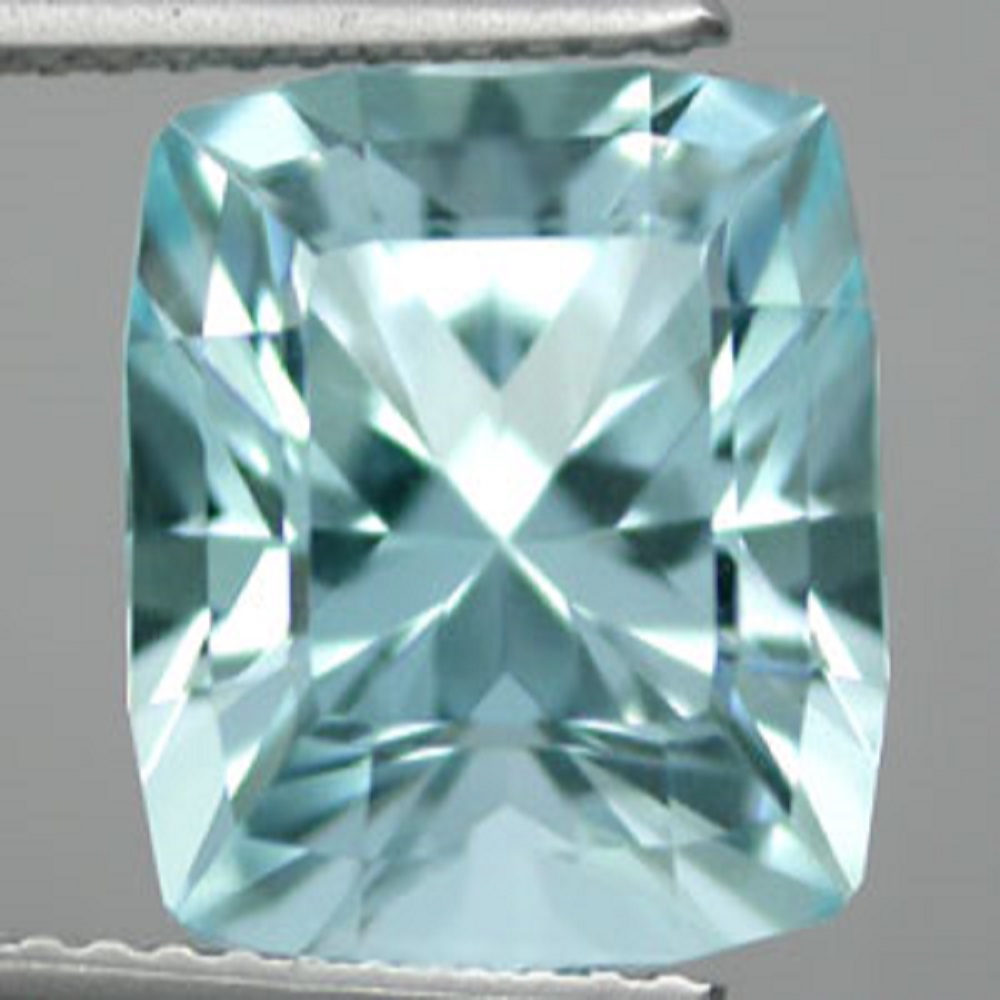
Blue, one of the world's most popular colors, is known for its calming effect, and of all the shades of blue available, none can match the calm found in aquamarine. Aquamarine embodies all that is natural. Aquamarine, the sparkling monthstone for March, ranges from pastel blue to bright green, its tones reminiscent of a refreshing ocean breeze.
Apatite:
The name apatite comes from the Greek word apatao, which means "to deceive", because apatite has often been confused with gems such as tourmaline, peridot (olivine) and beryl. Apatite is actually three different minerals, depending on a predominance of either fluorine, chlorine or the hydroxyl group: calcium (fluorine, chlorine, hydroxyl) phosphate. Gem quality apatite is rare, especially over a carat. The color is often dependent on the presence of rare earth elements and includes green, yellow, blue, violet, and a yellow-green variety.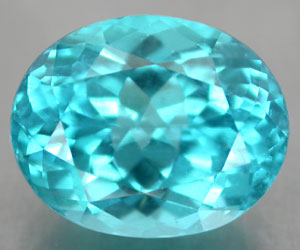
Diamond:
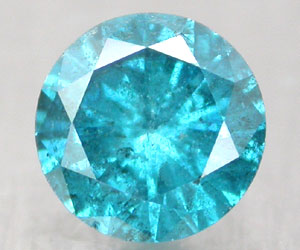
The word diamond comes from the Greek word adamas which means unsurpassed. Most of us think of white color when we mention diamonds but there are actually quite a few very beautiful so called fancy colored diamonds. These are available in a range of different colors such as blue, champagne, yellow, pink, black, red, green and more. Most fancy colored diamonds are treated (often with irradiation). This type of treatment replicates the natural process (which in the earth takes several million years).
Fluorite:
Fluorite derives its name from the Latin word fluor, meaning to flow (in relation to its low melting point), fluorite is known as the world's most colorful gemstone. Due to its glassy luster, fluorite is a highly sought after stone. Fluorite is the natural crystalline form of calcium fluoride and often forms fine cube-shaped crystals. It is a transparent to translucent mineral.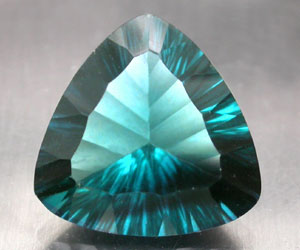
Iolite:
The name Iolite comes from the Greek word Ios, meaning violet. Iolite is a transparent, violet blue, light blue or yellow gray gemstone. A pleochroic paperclip (different colors appear when the gemstone is viewed from different angles), Iolite will display many colors in one and the same stone.
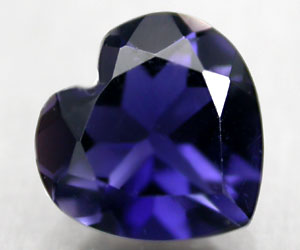
Iolite is a popular and interesting gemstone. It has a rather blue-violet color similar to tanzanite and has also been compared to pale blue sapphires. It is for this reason that it is sometimes called water sapphire.
An iolite ring or pendant is probably the best way to showcase this gemstone's unique color, as it is a durable stone well suited for everyday wear.
Kyanite:
Also called disthene, the name kyanite is derived from the Greek kyanos, meaning blue. The most popular varieties display intensely beautiful colors reminiscent of the best Ceylon and Kashmir sapphires. Although the name kyanite has been used since 1789, kyanite was sold in Europe as sapphire until the turn of the 20th century.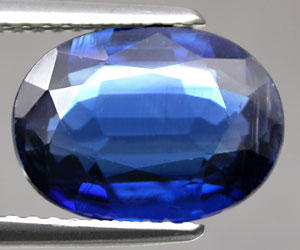
The very finest kyanite comes from the Kali Gandaki region in west-central Nepal. Nepalese kyanite is arguably the best ever found, displaying rich blue colors reminiscent of stunning sapphires.
Sapphire:
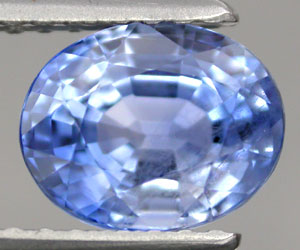
Sapphire is the most famous blue gemstone with colors ranging from light blue to deep blue. Sapphire is a form of corundum with a hardness of 9 on the Mohs scale. It is also considered one of the most valuable of all stones available today. Some blue sapphires are known to exhibit phenomenal properties such as asterism (star) or color-shifting ability. Today blue sapphires from Sri Lanka (Ceylon) are considered the most desirable, but in the past finds from Kashmir and Mogok, Burma were known to be the best quality. In recent years, very good quality sapphires have come from Madagascar and Tanzania.
Spinel:
The name spinel derives either from the Latin word for thorn, spina, as a result of spinel's characteristic crystals with pointed ends, or from the Greek word for spark, spintharis, referring to spinel's bright red hues.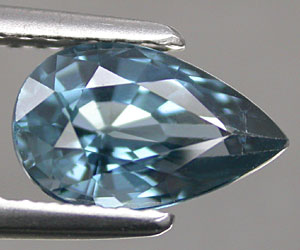
Spinel occurs in many colors including red, blue, pink, orange and a variety of other fine colors. Like ruby, spinel is mined from alluvial deposits. Spinels come from a handful of sources including Tajikistan, Sri Lanka, Madagascar, Tunduru in Tanzania and central Vietnam's Luc Yen region.
Tanzanite:
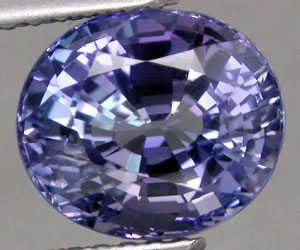
Tanzanite is one of the most popular gemstones today. It is an intense violet-blue gemstone variety of zoisite found in only one place in the entire world - the Merelani district of Tanzania near Mount Kilimanjaro.
What many people don't know is that tanzanite has a gray brown color but gets its brilliant color through routine heat treatment. Tanzanite has a hardness of 6 to 7 on the Mohs scale, but it is still durable enough for most jewelry.
Topaz:
Blue topaz is the second most popular colored gemstone of all time (after sapphire). Blue topaz has a hardness of 8 on the Mohs scale and is considered one of the most valuable gemstones. Like many gemstones today, the brilliant blue hues of topaz are obtained through an artificial irradiation and enhancement process. The colors of blue topaz are generally classified as three different shades; London blue topaz is a rich deep blue topaz, considered the most valuable and desirable shade of blue. A medium blue called Swiss blue topaz is second most popular, followed by a light sky blue topaz. Topaz is the month stone for December.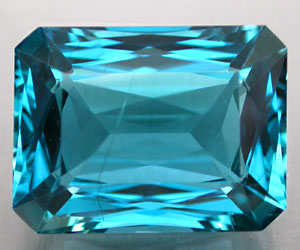
Tourmaline:
Tourmaline has a colorful and romantic history and comes in an incredible array of beautiful colors. Tourmaline is found in a palette of over 100 different shades, and is one of the world's most diverse gemstones. This has resulted in the nickname "chameleon gem", which is doubly appropriate when you consider that a major source of tourmaline is Madagascar, home to more than half of the world's chameleon species. The name tourmaline comes from the Sinhalese word tourmali (to mix), due to a historical tendency for tourmaline to be mixed and mistaken for other gemstone varieties.alin:
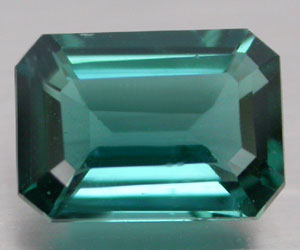
Ranging in color from light to deep blue, indicolite tourmaline is rare and high-quality specimens are highly sought after collectors' items. Indicolite is strongly pleochroic (shows different hues when viewed from different angles). The Romans reportedly used indicolite, especially in carved brooches that often bore images of animals, because they believed it had strange occult powers. It was rediscovered in Europe in 1703 when the Dutch imported indicolite they had obtained in Sri Lanka. Generally, only indicolite stones under one carat are available and as a result larger sizes are very rare and sought after.
Paraíba tourmaline gets its spectacular colors from small amounts of copper, with manganese and iron. Greater amounts of copper produce more blue and turquoise colors, while elevated manganese produces more purple and red hues. While most Paraíba tourmalines are under one carat, gems from Mozambique can reach sizes up to 40 carats or more. As with emeralds, inclusions are common in Paraíba tourmaline, making its color the main beauty. Its beautiful bright colors have made Paraíba tourmaline hugely popular within a short time.
Zircon:
Zircon is the birthstone for the month of December. Zircon is often used as a Diamond substitute because Zircon has such an incredibly strong brilliance that easily matches that of Diamonds. Many confuse Zircon with Cubic Zircon, which is not entirely fair. Cubic Zircon is an inexpensive, synthetic stone. The only equality with a natural, genuine Zircon is the name similarity and the color.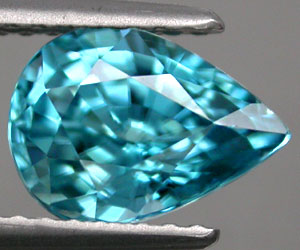
Blue zircon has a hardness of 7 to 7.5 on the Mohs scale, which makes it an excellent jewelry stone.
When it comes to colored gemstones, color is one of the most important characteristics and many people think that the color itself is more important than the type of gemstone.
Most people think of blue sapphire when blue gemstones are mentioned, but there are a number of other blue gemstones available today. With the help of our guide below, you can learn about some of the most popular blue gemstones available today:
Aquamarine
Apatite
Diamond
Fluorite
Iolite
Kyanite
Sapphire
Spinel
Tanzanite
Topaz
Tourmaline
Zircon
Aquamarine:
With its gorgeous color and stunning clarity, aquamarine is very popular with both collectors and wearers of fine jewelry. It comes as no surprise that the name derives from the Latin words for "water of the sea."
Blue, one of the world's most popular colors, is known for its calming effect, and of all the shades of blue available, none can match the calm found in aquamarine. Aquamarine embodies all that is natural. Aquamarine, the sparkling monthstone for March, ranges from pastel blue to bright green, its tones reminiscent of a refreshing ocean breeze.
Apatite:
The name apatite comes from the Greek word apatao, which means "to deceive", because apatite has often been confused with gems such as tourmaline, peridot (olivine) and beryl. Apatite is actually three different minerals, depending on a predominance of either fluorine, chlorine or the hydroxyl group: calcium (fluorine, chlorine, hydroxyl) phosphate. Gem quality apatite is rare, especially over a carat. The color is often dependent on the presence of rare earth elements and includes green, yellow, blue, violet, and a yellow-green variety.
Diamond:
The word diamond comes from the Greek word adamas which means unsurpassed. Most of us think of white color when we mention diamonds but there are actually quite a few very beautiful so called fancy colored diamonds. These are available in a range of different colors such as blue, champagne, yellow, pink, black, red, green and more. Most fancy colored diamonds are treated (often with irradiation). This type of treatment replicates the natural process (which in the earth takes several million years).
Fluorite:
Fluorite derives its name from the Latin word fluor, meaning to flow (in relation to its low melting point), fluorite is known as the world's most colorful gemstone. Due to its glassy luster, fluorite is a highly sought after stone. Fluorite is the natural crystalline form of calcium fluoride and often forms fine cube-shaped crystals. It is a transparent to translucent mineral.
Iolite:
The name Iolite comes from the Greek word Ios, meaning violet. Iolite is a transparent, violet blue, light blue or yellow gray gemstone. A pleochroic paperclip (different colors appear when the gemstone is viewed from different angles), Iolite will display many colors in one and the same stone.
Iolite is a popular and interesting gemstone. It has a rather blue-violet color similar to tanzanite and has also been compared to pale blue sapphires. It is for this reason that it is sometimes called water sapphire.
An iolite ring or pendant is probably the best way to showcase this gemstone's unique color, as it is a durable stone well suited for everyday wear.
Kyanite:
Also called disthene, the name kyanite is derived from the Greek kyanos, meaning blue. The most popular varieties display intensely beautiful colors reminiscent of the best Ceylon and Kashmir sapphires. Although the name kyanite has been used since 1789, kyanite was sold in Europe as sapphire until the turn of the 20th century.
The very finest kyanite comes from the Kali Gandaki region in west-central Nepal. Nepalese kyanite is arguably the best ever found, displaying rich blue colors reminiscent of stunning sapphires.
Sapphire:
Sapphire is the most famous blue gemstone with colors ranging from light blue to deep blue. Sapphire is a form of corundum with a hardness of 9 on the Mohs scale. It is also considered one of the most valuable of all stones available today. Some blue sapphires are known to exhibit phenomenal properties such as asterism (star) or color-shifting ability. Today blue sapphires from Sri Lanka (Ceylon) are considered the most desirable, but in the past finds from Kashmir and Mogok, Burma were known to be the best quality. In recent years, very good quality sapphires have come from Madagascar and Tanzania.
Spinel:
The name spinel derives either from the Latin word for thorn, spina, as a result of spinel's characteristic crystals with pointed ends, or from the Greek word for spark, spintharis, referring to spinel's bright red hues.
Spinel occurs in many colors including red, blue, pink, orange and a variety of other fine colors. Like ruby, spinel is mined from alluvial deposits. Spinels come from a handful of sources including Tajikistan, Sri Lanka, Madagascar, Tunduru in Tanzania and central Vietnam's Luc Yen region.
Tanzanite:
Tanzanite is one of the most popular gemstones today. It is an intense violet-blue gemstone variety of zoisite found in only one place in the entire world - the Merelani district of Tanzania near Mount Kilimanjaro.
What many people don't know is that tanzanite has a gray brown color but gets its brilliant color through routine heat treatment. Tanzanite has a hardness of 6 to 7 on the Mohs scale, but it is still durable enough for most jewelry.
Topaz:
Blue topaz is the second most popular colored gemstone of all time (after sapphire). Blue topaz has a hardness of 8 on the Mohs scale and is considered one of the most valuable gemstones. Like many gemstones today, the brilliant blue hues of topaz are obtained through an artificial irradiation and enhancement process. The colors of blue topaz are generally classified as three different shades; London blue topaz is a rich deep blue topaz, considered the most valuable and desirable shade of blue. A medium blue called Swiss blue topaz is second most popular, followed by a light sky blue topaz. Topaz is the month stone for December.
Tourmaline:
Tourmaline has a colorful and romantic history and comes in an incredible array of beautiful colors. Tourmaline is found in a palette of over 100 different shades, and is one of the world's most diverse gemstones. This has resulted in the nickname "chameleon gem", which is doubly appropriate when you consider that a major source of tourmaline is Madagascar, home to more than half of the world's chameleon species. The name tourmaline comes from the Sinhalese word tourmali (to mix), due to a historical tendency for tourmaline to be mixed and mistaken for other gemstone varieties.alin:
Ranging in color from light to deep blue, indicolite tourmaline is rare and high-quality specimens are highly sought after collectors' items. Indicolite is strongly pleochroic (shows different hues when viewed from different angles). The Romans reportedly used indicolite, especially in carved brooches that often bore images of animals, because they believed it had strange occult powers. It was rediscovered in Europe in 1703 when the Dutch imported indicolite they had obtained in Sri Lanka. Generally, only indicolite stones under one carat are available and as a result larger sizes are very rare and sought after.
Paraíba tourmaline gets its spectacular colors from small amounts of copper, with manganese and iron. Greater amounts of copper produce more blue and turquoise colors, while elevated manganese produces more purple and red hues. While most Paraíba tourmalines are under one carat, gems from Mozambique can reach sizes up to 40 carats or more. As with emeralds, inclusions are common in Paraíba tourmaline, making its color the main beauty. Its beautiful bright colors have made Paraíba tourmaline hugely popular within a short time.
Zircon:
Zircon is the birthstone for the month of December. Zircon is often used as a Diamond substitute because Zircon has such an incredibly strong brilliance that easily matches that of Diamonds. Many confuse Zircon with Cubic Zircon, which is not entirely fair. Cubic Zircon is an inexpensive, synthetic stone. The only equality with a natural, genuine Zircon is the name similarity and the color.
Blue zircon has a hardness of 7 to 7.5 on the Mohs scale, which makes it an excellent jewelry stone.