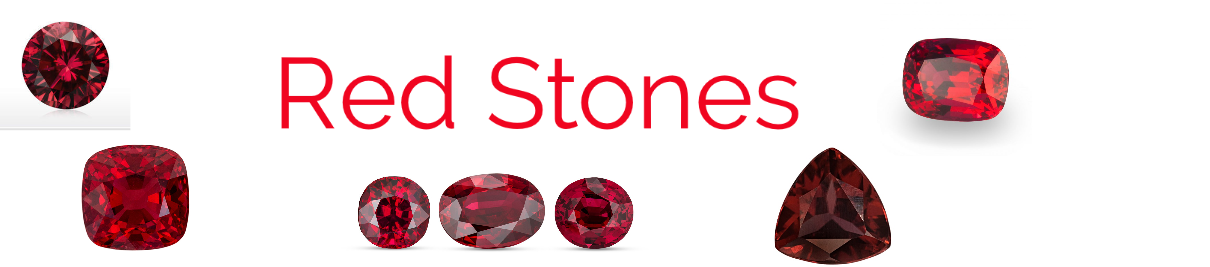
For centuries, people have adorned themselves with red gemstones. Red has had strong symbolic associations with love, passion, fire and blood, but true reds are rare in gemstones.
Ruby
Spinel
Rubelite
Diamond
Garnet
Zircon
Fire Opal
Ruby
Of all the red gemstones, none is as famous as ruby, the birthstone of July and the classic red stone. These stones can have a vibrant color made even more intense by fluorescence. That's right, rubies can literally glow in the sunlight!
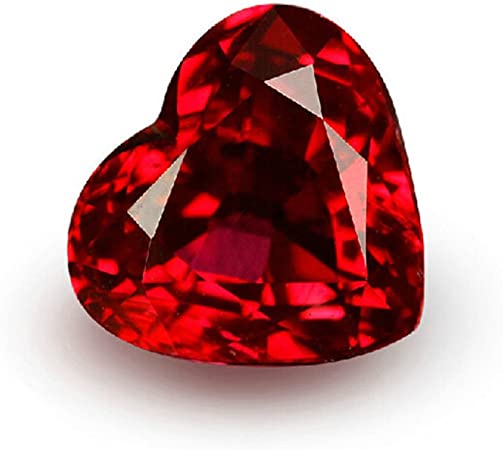
Ruby is a gemstone variant of the mineral corundum that contains chromium, a rare element that gives the red color and fluorescence.
Ruby is among the rarest gemstones in the world, and most rubies are heat treated to enhance the color - and raise the price. A newer treatment method, flux, has made good quality rubies available at a very affordable price. These have the same durability and beauty as natural stones but at a fraction of the price of an untreated or traditionally heat treated ruby.
Spinel
If you've never heard of spinel, you're not alone. Some in the gem trade consider spinel to be one of the industry's best kept secrets! Natural red spinel is an affordable alternative to ruby.
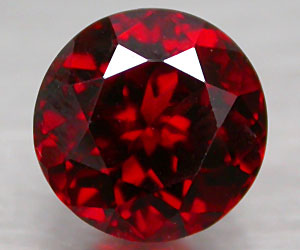
Spinel was often mistaken for ruby and because of this mistaken identity, spinel has received historical references. Spinels occupy a unique place in gemstone history. Although spinel is reported as a separate gemstone variety as early as 1587, the red spinel stones were mistaken for ruby due to its intense red color (similar to that of ruby). It was not only the color similarities that confused but also the proximity to ruby foundation stones. It was not until 1783 that Rom de L'Isle became the first scientist to clearly distinguish the differences between ruby and red spinel.
Red spinel's almost identical resemblance to ruby has resulted in red spinel being part of many of the world's most famous gemstone collections, including the Vatican and the Crown Jewels of Russia, Iran and England. Did you know that both the legendary 352 carat Timur ruby and the 170 carat Black Prince's ruby, which are part of the British Imperial State Crown, are actually red spinels?
Rubelite
Tourmaline, the birthstone of October, comes in all the colors of the rainbow. Trace amounts of manganese in the crystal structure cause red hues in tourmaline, and the red variety of tourmaline is called rubelite.
Rubelite, deriving its name from the Latin word rubellus, meaning "coming from red" is a lustrous, reddish pink and purple-toned tourmaline. During the 17th century, on behalf of the Tsar of Russia, many gemstone jewelry were designed for the Imperial Crown Court. However, gems originally thought to be rubies have later been found to be rubelite.
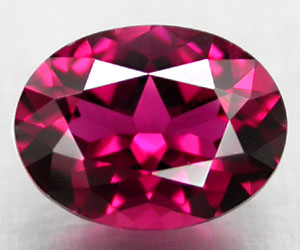
Although these stones can have fantastic color, rubelites often contain inclusions. Still, for those looking for a raspberry engagement ring, these stones offer another affordable alternative to rubies.
Red Diamond
If you like the extremely rare, you may be interested in red diamond. In fact, only a handful of red diamonds have ever been mined from the Earth. While most of these weigh less than a carat, the world's largest red diamond, the Moussaieff Red Diamond, weighs 5.11 carats. Due to their rarity, these diamonds also command sky-high prices.
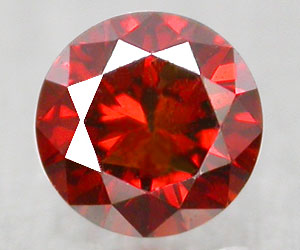
Thanks to modern treatment methods, red diamonds are now available on the market. A treatment technique called irradiation replicates the natural process (which in the Earth takes several million years). These fancy colored diamonds are natural and are still very rare and thus valuable.
Garnet
Another classic gemstone with many symbolic associations is garnet, the birthstone of January. Garnets are very available and are a good value even in large sizes.
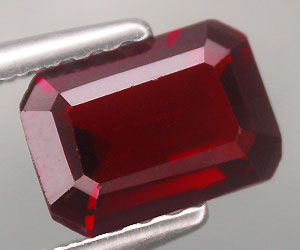
Almandine garnets show the familiar brownish-red color, but pyrope garnets can have intense red hues, while rhodolite garnets exhibit purple-red hues that many love. Although the pure reds in the pyrope garnet command higher prices than other red garnets, the prices are still affordable.
Zircon
Although often associated with blue, this birthstone for December can display almost any color. The wonderful luster of zircon makes it an excellent diamond substitute. Shades of red can be bright and attractive but are often the result of heat treatment.
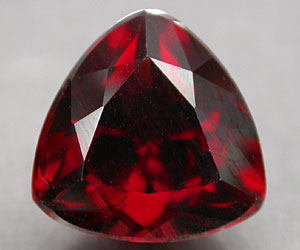
Fire Opal
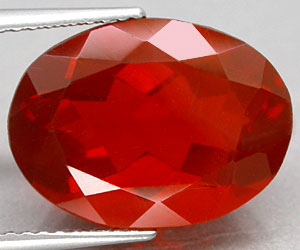
The "fire" in fire opal refers to the stone's body color, which ranges from yellow to red. This opal can be translucent or transparent and does not show the same play of color as a 'classic' opal. Mexico is the largest producer of fire opal, and the term "Mexican opal" refers to fire opal.