
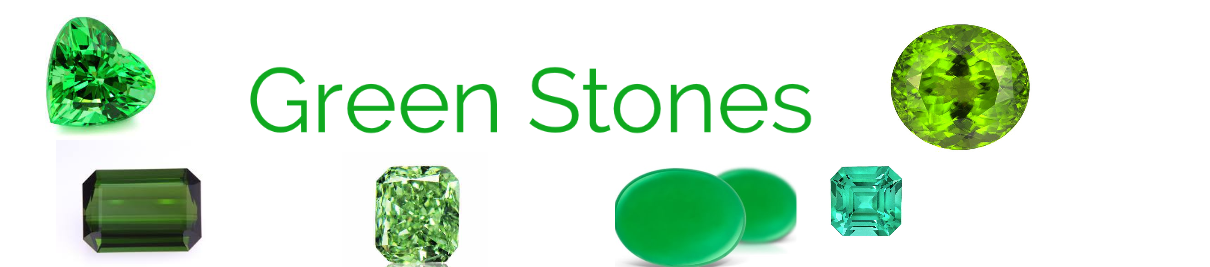
Since ancient times, emerald has been synonymous with green stones. However, there are so many more green gemstones that give you many alternatives to the classic emerald.
Emerald
Peridot
Chrome Diopside
Sapphire
Diamond
Tsavorite Garnet
Tourmaline
Demantoid Garnet
Prehnite
Sphene
Fluorite
Alexandrite
Topaz
Grandidierite
Emerald
The green color of emeralds is unparalleled in the gemstone kingdom. Its beautiful green color, combined with its rarity, makes emerald one of the world's most valuable gemstones. Interestingly, its name comes from the Greek word smaragdos, meaning green gem.
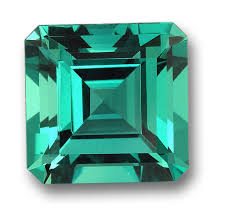
Emeralds are a member of the beryl family of minerals. Tiny traces of chromium, vanadium, and iron give emeralds their famous "green color." The green crystals grow slowly within metamorphic rocks and are limited in size by bedrock, making large emeralds rare and expensive.
Peridot
Peridot was called the "gem of the sun" by the ancient Egyptians and the "emerald of the evening" by the Romans. Peridot was a favorite gemstone of Cleopatra and was historically often mistaken for emerald.
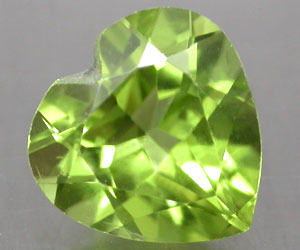
Peridot is a variant of olivine and has colors that vary from golden lime green to rich grass green. Traditionally, the most sought-after color shades have been rich grass greens.
Chrome Diopside
Chrome diopside has a beautiful rich green color, similar to that of fine emeralds or rare Tsavorite garnets. Colored by chromium, some claim this stone is beneficial for health, relationships, spirituality and financial success.
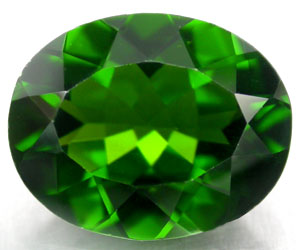
A major reason why chrome diopside is relatively unknown is that it has only recently become available in significant commercial quantities. Chrome diopside shows strong birefringence and has a vitreous luster.
Sapphire
Sapphires come in all sorts of colors (although the blue sapphire is traditionally the most sought after). Sapphires get their color from small components of iron and titanium.
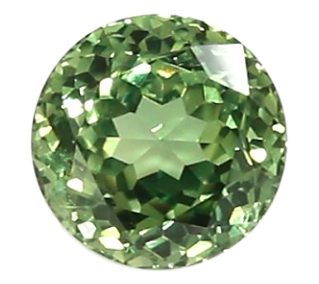
Historically, many green sapphires have been found in Thailand. Today, green sapphires are mined in countries such as Sri Lanka, Myanmar, Cambodia, Kenya, Zimbabwe, Australia and Brazil.
Diamond
If you like the extremely rare, you may be interested in green diamond. Extremely few completely natural, untreated green diamonds are found. Due to their rarity, these diamonds also command sky-high prices.
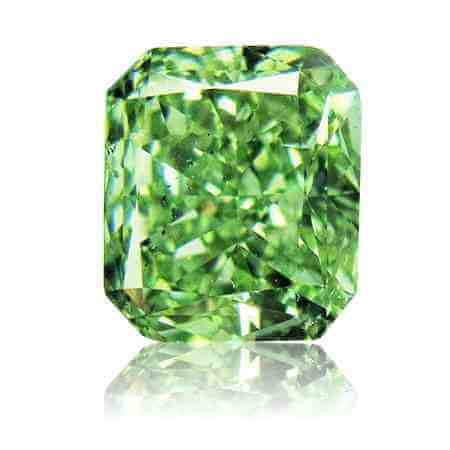
Thanks to modern treatment methods, green diamonds are now available on the market. A treatment technique called irradiation replicates the natural process (which in the Earth takes several million years). These fancy colored diamonds are natural and are still very rare and thus valuable.
Tsavorite Garnet
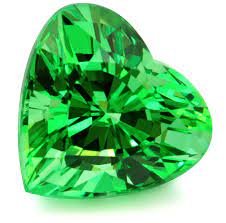
Tanzania has a wealth of beautiful colored garnets, among them a brilliant green grossular garnet, Tsavorite. Tsavorite is East Africa's most beautiful green gemstone, rightful heir to the title "the king of garnets. Tsavorite has established itself as one of the world's most beautiful and sought-after gemstones. Tsavorite garnet is extremely rare. In fact, it is so rare that mining may be completely exhausted within a couple of years.
Tourmaline
Tourmaline has a colorful and romantic history and comes in an incredible array of beautiful colors. Tourmaline is found in a palette of over 100 different shades, and is one of the world's most diverse gemstones. This has resulted in the nickname "chameleon gem", which is doubly appropriate when you consider that a major source of tourmaline is Madagascar, home to more than half of the world's chameleon species.
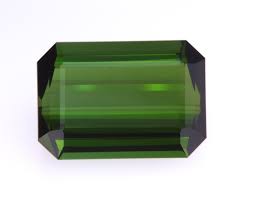
Normally free of inclusions, green tourmaline offers consumers everything they want in an emerald, but with better clarity. Green Tourmaline has become popular with collectors in recent years. Chrome tourmaline is an intense green variety of tourmaline found in East Africa. Despite the name, most chrome tourmalines are actually colored by vanadium.
Demantoid Garnet
Discovered in 1855 in Russia's central Ural Mountains at two alluvial deposits, it was first thought to be an emerald, and even took the name "Uralian emerald" until gemologists took a closer look. A colored variety of andradite garnet, the name demantoid is derived from the Old German word Demant meaning "diamond-like," because of a luster and dispersion superior to that of diamonds.
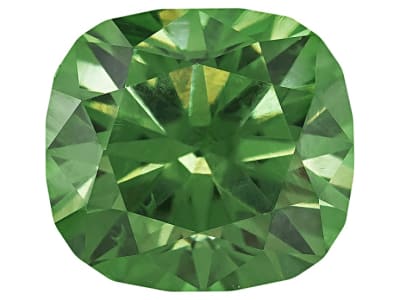
Much of the Russian material is worked out but small-scale mining resumed in Russia in 1991. Much of the demantoid garnet on the market today comes from relatively new deposits in Namibia. Due to a luster better than diamond, demantoid garnet is an absolute must for any serious collector.
Prehnite
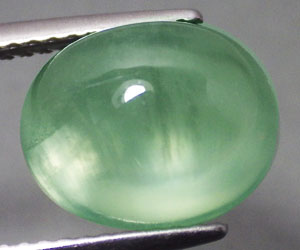
Prehnite is a wonderful, exotic gemstone that often has a very fine luster. Prehnit is named after Colonel Hendrik Von Prehn who discovered this stone in South Africa in the middle of the 18th century. The most sought after Prehnit stones usually have a delicious apple green color, very similar to Jade. However, prehnite can also occur in other colors such as yellow, gray, white and colorless. over 90% of gemstone quality Prehnite is mined in Australia.
Sphene
Sphene is named after the Greek word for wedge, as its crystals are normally wedge-shaped. Because it contains titanium, sphene is also sometimes referred to by its mineral name titanite.
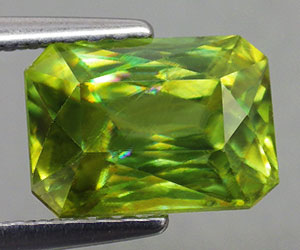
Sphene's magnificent luster, unique hues, strong pleochroism, (diamond-like) luster and birefringence make sphene ideal for jewelry that catches the light to show sphene's sparkling qualities to full effect. A unique property of sphene is double refraction (doube refraction), which means that light splits into two rays as it passes through the stone.
Fluorite
Fluorite derives its name from the Latin word fluor, meaning to flow (in relation to its low melting point), fluorite is known as the world's most colorful gemstone.
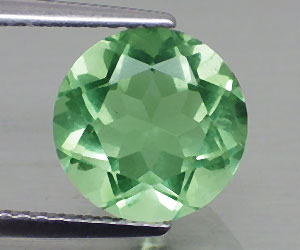
Fluorite, from which we get the word fluorescent, crosses the entire color spectrum, from deep purple to crimson red, blue to green (chrome fluorite), and frosty orange to lemon yellow. Fluorite is one of the more famous fluorescent minerals.
Alexandrite
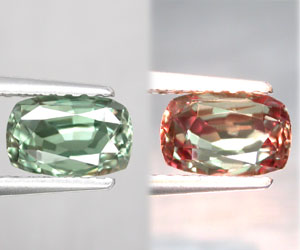
Known in Russia as the Tsar's Gemstone, alexandrite is truly a miraculous gemstone. Often described as an "emerald by day" and "ruby by night", when viewed in sunlight, alexandrite displays a green color but when viewed under candlelight, the color appears as red, violet, raspberry, purple or orange.
Although alexandrite is available from other places, it is the Russian alexandrites that are most sought after and rare.
Topaz
The origin of the name topaz generates confusion, as some references point to the Sanskrit word tapaz, meaning fire, while others believe it is named after Zeberget, an island in the Red Sea that the Greeks called Topazius, the ancient source of peridot.
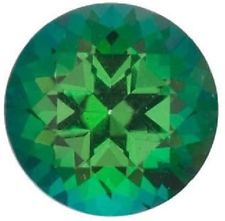
Green topazes are extremely rarely found in nature, but with the help of diffusion treatment we now have beautiful and affordable green topazes. Applied to the highest quality natural white topazes, the treatment is permanent without wear. This process can induce a shimmering appearance, whose color range depends on the light source and the angle you see the stone from.
Grandidierite
Grandidierite is an extremely rare gemstone that is often ranked among the top 10 rarest stones in the world! Grandidierite was first discovered in 1902 in Madagascar by Alfred Lacroix, a French mineralogist. Lacroix named the mineral in honor of the French explorer and naturalist Alfred Grandidier (1836-1912).
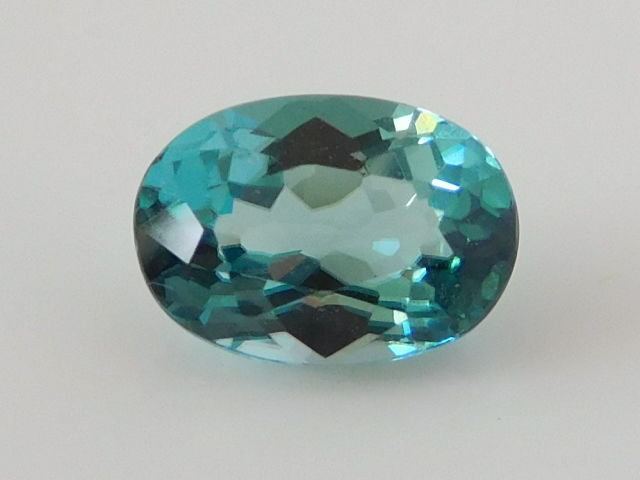
Since its initial discovery, only very small amounts of grandidierite have been found in isolated locations around the world, including Malawi, Namibia, Sri Lanka and Madagascar. The material normally found is only suitable for cabochon grinding.