
January Birthstones:
For anyone born in January, garnet is a colorful gemstone to start the new year.
Garnet gemstones are most often red but come in a range of other colors.
Garnet:
Basic facts:
Month stone: January
Origin: India, Kenya, Madagascar, Mali, Mozambique, Namibia, Nigeria, Russia, Sri Lanka & Tanzania
Colors: Various
Family: Garnet
Hardness: 6.5 – 7.5
Refractive Index: 1.72 – 1.94
Specific Gravity: 3.62 – 4.30
Treatment: Some types are sometimes treated
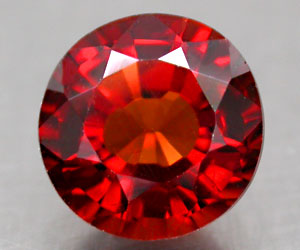
Garnet has a history that spans over 5,000 years. The name comes from the Latin word for seed, granatus, because the stone has a similar color to the seeds from the pomegranate fruit.
Garnets are a group of related mineral species with essentially the same crystal structure, but varying in chemical composition.
Myths and legends
Garnet has long been associated with fire and was thought to have the ability to illuminate the sky at night. Today, garnets remain a symbol of faith, truth and light.
According to Jewish legends, during the Great Flood, a radiant shell guided the way for Noah, ultimately leading the ark to salvation.
Garnet jewelry was buried with the Norwegians to light the way to Valhalla.
The Crusaders had grenades in their armor in the belief that its power would lead them to safety.
In 1912, garnets were made the official stone of the month for January by the American National Association of Jewelers. It is also the gemstone for Aquarius and a traditional gift for 2nd and 6th wedding anniversaries.
Garnet facts
Although there are many types of garnets (including historical names, there are currently 38 known garnet names) when you say garnet, most people automatically think of small dark red gems. In fact, pomegranates offer enough variety for every taste.
Color changing Garnet
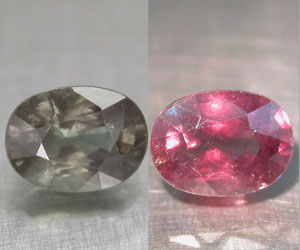
Color changing garnets are one of the rarest, most interesting and phenomenal gemstones. An extremely rare variety of Malay garnet, the color changing garnet is actually a mixture of pyrope and spessartine garnet. Comparatively, it is somewhat rarer than alexandrite.
While color-changing garnets have been reported since the early 1970s, it was only noted as a curiosity by a very small number of gemologists and gemstone collectors due to its very limited quantities and colors that were considered more strange rather than beautiful. This situation changed dramatically in 1987 when Russian alexandrite-like color-changing garnets were discovered in Tanzania's Umba Valley. Since then, color-changing garnets have become increasingly sought after by gemstone collectors and jewelry lovers.
The Madagascan stones generally exhibit a green color (including bluish green) when viewed under sunlight, which shifts to raspberry (reddish purple) under bright light. The Tanzanian stones generally exhibit khaki olive lime green when viewed in sunlight, shifting to orange crimson red under candlelight. But other color variants of color-changing garnet exist - in daylight the color varies from shades of green, beige, brown, gray and blue (in shades more synonymous with blue spinel rather than sapphire), but in incandescent light they appear in a reddish or purple/pink color . The color change can be intense and equal to the color change of the highest quality alexandrites. As a result, color-changing garnets can easily be mistaken for alexandrite.
Discovered in the late 1990s, Madagascar color-changing garnet is from Bekily in southern Madagascar, while Tanzania's color-changing garnet today mainly comes from Tunduru in Tanzania's Ruvuma region.
Demantoid Garnet
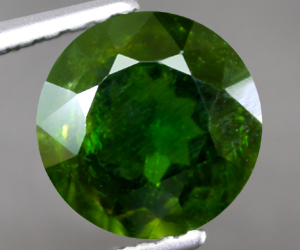
A favorite of the famous Russian goldsmith Karl Fabergé, demantoid garnet is one of the most desirable of all colored gemstones and very rare. Discovered in 1855 in Russia's central Ural Mountains at two alluvial deposits, it was first thought to be an emerald, and even took the name "Uralian emerald" until gemologists took a closer look. A colored variety of andradite garnet, the name demantoid is derived from the Old German word Demant meaning "diamond-like," because of a luster and dispersion superior to that of diamonds.
Commonly known as "horsetail" inclusions, some Russian demantoid garnets have golden byssolite threads that form beautiful patterns that resemble the tail of a horse. Demantoid garnets with prominent horsetail inclusions are particularly sought after. Much of the Russian material is worked out but small-scale mining resumed in Russia in 1991. Much of the demantoid garnet on the market today comes from relatively new deposits in Namibia. Due to a luster better than diamond, demantoid garnet is an absolute must for any serious collector.
Hessonite Garnet
A variety of grossular garnet, hessonite comes in two colors, golden and cinnamon (this variety is commonly known as the "cinnamon stone"). A perfectly colored hessonite is a bright golden orange that resembles a combination of honey and orange with an internal fire. Some hessonites have shades of red and brown.
Popular for thousands of years, the ancient Greeks and Romans used it in jewelry. Interestingly, the name comes from the Greek word esson, which means worse, as it is somewhat softer than other garnet varieties.
Malayan Garnet
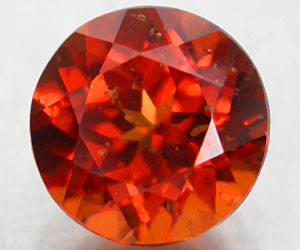
Discovered in the mid-1960s in Tanzania's Umba Valley, this red-orange to pink-orange variety of garnet was originally believed to be spessartine garnet.
Malaia garnet is a mixture of pyrope, almandine and spessartine and exhibits sparkling red shimmer.
Mali Garnet
Mali garnet is one of the latest discoveries in the garnet family. Mali garnet is an attractive and very interesting rare mixture of andradite and grossular that was only discovered in late 1994 at the Sandaré Mine in Mali's Kayes region (Diakon Arrondissement). Extremely rare, Mali garnets are a bright, even lighting yellowish green color.
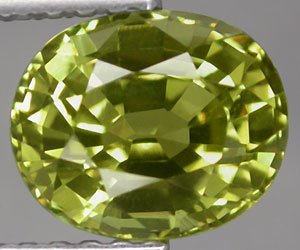
Mandarin & Spessartine Garnet
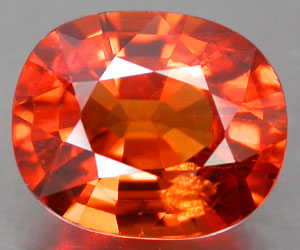
Mandarin and tangerine garnets are intensely bright color variants of the rare orange-red spessartine garnets, also known as spessartite. Spessartine garnet is named after the place where it was first discovered, Spessart, Bavaria in the mid-1800s.
In 1991 Mandarin garnets were discovered in northwestern Namibia where the Kunene River borders Namibia and Angola. In 1994, new deposits were unearthed in southwestern Nigeria.
This variety of garnet was initially called Kunene spessartine or hollandine, but the slightly sexier names mandarin garnet and tangerine garnet were quickly adopted.
Merelani mint Garnet
Long regarded as a source of the finest colored gemstones, it is no surprise that Tanzania is home to some of the world's most sought after garnets. Merelani mint garnet is a relatively new rare gemstone, whose popularity is only limited by its scarcity.
Named for its color and where it is mined, Merelani mint garnet was first discovered around 1998 in the same area as tanzanite (Merelani Hills, Arusha region, Tanzania). Merelani mint garnet is basically another shade of its more famous relative Tsavorite garnet (grossular garnet). Extremely rare, the Merelani mint garnet is always relatively small in size (under a carat) and is usually with inclusions such as small bubbles or silk.
Mozambique Garnet
Originating in the East African nation they are named after, Mozambique garnets are known for their high quality and wonderfully warm, red colors.
Mozambique garnet is a mixture of pyrope and almandine garnet, similar in color to rhodolite garnet, but slightly redder and darker.
Pyrope Garnet
Pyrope comes from the Greek word pyropos, meaning "burning eyes." Fine pyrope garnets can be visually confused with dark rubies. It was a fashionable stone during the 18th and 19th centuries and many rubies from this period have later been found to be pyrope garnets.
Rhodolite Garnet
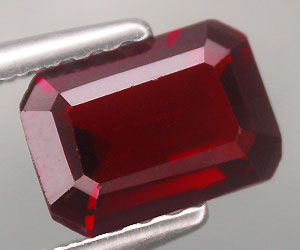
The name rhodolite is taken from the Greek words rho'don and lithos, which literally means "pink stone." Possessing a color reminiscent of rhododendron flower, this name was first used in the late 19th century to describe garnets.
Rhodolite is a naturally occurring mixture of almandine and pyrope garnet. Although raspberry is the most prized color, rhodolite also comes in shades of pink to lavender.
Tsavorite Garnet
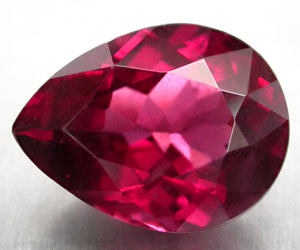
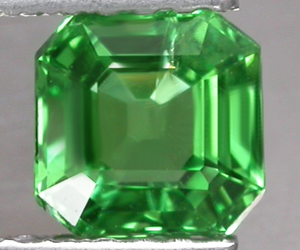
Tanzania has a wealth of beautiful colored garnets, among them a brilliant green grossular garnet, Tsavorite. Tsavorite is East Africa's most beautiful green gemstone, rightful heir to the title "the king of garnets. Tsavorite has established itself as one of the world's most beautiful and sought-after gemstones. Tsavorite garnet is extremely rare. In fact, it is so rare that mining may be completely exhausted within a couple of years.
First discovered in 1967 by the now legendary Scottish geologist, Campbell R. Bridges, Tsavorite has quickly become a favorite among gemstone and jewelry lovers. Bridges discovered Tsavorite in Tanzania, but at the time it was impossible to get an export permit to bring the gems out. Bridges, with the help of the local Masai and Kikuyu tribesmen, continued his search, but this time in neighboring Kenya. In 1971, Bridges discovered Tsavorite for the second time in Kenya's Tsavo region. Life in the African bush is dangerous and the Tsavo region is known as the area of man-eating lions and poachers. To protect himself from predators and bandits, Bridges had to live in a tree house. And because he didn't want his newfound treasure to be stolen, he cunningly used the local people's fear of snakes by placing a python in among his Tsavorit stones.
Tsavorite eventually found its way to America where Henry Platt of Tiffany & Co named the stone based on the famous Tsavo National Park in Kenya.
While Tsavorite was once mined in 40 different areas across Tanzania and Kenya, only four mines are still producing commercial quantities.
Tsavorite's intense green color, similar to that of fine emeralds, is due to the presence of vanadium in the bedrock. Like all garnets, Tsavorite has few inclusions and its high refractive index results in superb brilliance.
Umbalite Garnet
Umbalite garnet is an attractive light pink-purple garnet first discovered in Tanzania's Umba Valley in 1978. A cocktail of pyrope, almandine with small traces of spessartine garnet, production of this unusual gemstone has been irregular and is therefore highly sought after by connoisseurs of fine precious stones.
For anyone born in January, garnet is a colorful gemstone to start the new year.
Garnet gemstones are most often red but come in a range of other colors.
Garnet:
Basic facts:
Month stone: January
Origin: India, Kenya, Madagascar, Mali, Mozambique, Namibia, Nigeria, Russia, Sri Lanka & Tanzania
Colors: Various
Family: Garnet
Hardness: 6.5 – 7.5
Refractive Index: 1.72 – 1.94
Specific Gravity: 3.62 – 4.30
Treatment: Some types are sometimes treated
Garnet has a history that spans over 5,000 years. The name comes from the Latin word for seed, granatus, because the stone has a similar color to the seeds from the pomegranate fruit.
Garnets are a group of related mineral species with essentially the same crystal structure, but varying in chemical composition.
Myths and legends
Garnet has long been associated with fire and was thought to have the ability to illuminate the sky at night. Today, garnets remain a symbol of faith, truth and light.
According to Jewish legends, during the Great Flood, a radiant shell guided the way for Noah, ultimately leading the ark to salvation.
Garnet jewelry was buried with the Norwegians to light the way to Valhalla.
The Crusaders had grenades in their armor in the belief that its power would lead them to safety.
In 1912, garnets were made the official stone of the month for January by the American National Association of Jewelers. It is also the gemstone for Aquarius and a traditional gift for 2nd and 6th wedding anniversaries.
Garnet facts
Although there are many types of garnets (including historical names, there are currently 38 known garnet names) when you say garnet, most people automatically think of small dark red gems. In fact, pomegranates offer enough variety for every taste.
Color changing Garnet
Color changing garnets are one of the rarest, most interesting and phenomenal gemstones. An extremely rare variety of Malay garnet, the color changing garnet is actually a mixture of pyrope and spessartine garnet. Comparatively, it is somewhat rarer than alexandrite.
While color-changing garnets have been reported since the early 1970s, it was only noted as a curiosity by a very small number of gemologists and gemstone collectors due to its very limited quantities and colors that were considered more strange rather than beautiful. This situation changed dramatically in 1987 when Russian alexandrite-like color-changing garnets were discovered in Tanzania's Umba Valley. Since then, color-changing garnets have become increasingly sought after by gemstone collectors and jewelry lovers.
The Madagascan stones generally exhibit a green color (including bluish green) when viewed under sunlight, which shifts to raspberry (reddish purple) under bright light. The Tanzanian stones generally exhibit khaki olive lime green when viewed in sunlight, shifting to orange crimson red under candlelight. But other color variants of color-changing garnet exist - in daylight the color varies from shades of green, beige, brown, gray and blue (in shades more synonymous with blue spinel rather than sapphire), but in incandescent light they appear in a reddish or purple/pink color . The color change can be intense and equal to the color change of the highest quality alexandrites. As a result, color-changing garnets can easily be mistaken for alexandrite.
Discovered in the late 1990s, Madagascar color-changing garnet is from Bekily in southern Madagascar, while Tanzania's color-changing garnet today mainly comes from Tunduru in Tanzania's Ruvuma region.
Demantoid Garnet
A favorite of the famous Russian goldsmith Karl Fabergé, demantoid garnet is one of the most desirable of all colored gemstones and very rare. Discovered in 1855 in Russia's central Ural Mountains at two alluvial deposits, it was first thought to be an emerald, and even took the name "Uralian emerald" until gemologists took a closer look. A colored variety of andradite garnet, the name demantoid is derived from the Old German word Demant meaning "diamond-like," because of a luster and dispersion superior to that of diamonds.
Commonly known as "horsetail" inclusions, some Russian demantoid garnets have golden byssolite threads that form beautiful patterns that resemble the tail of a horse. Demantoid garnets with prominent horsetail inclusions are particularly sought after. Much of the Russian material is worked out but small-scale mining resumed in Russia in 1991. Much of the demantoid garnet on the market today comes from relatively new deposits in Namibia. Due to a luster better than diamond, demantoid garnet is an absolute must for any serious collector.
Hessonite Garnet
A variety of grossular garnet, hessonite comes in two colors, golden and cinnamon (this variety is commonly known as the "cinnamon stone"). A perfectly colored hessonite is a bright golden orange that resembles a combination of honey and orange with an internal fire. Some hessonites have shades of red and brown.
Popular for thousands of years, the ancient Greeks and Romans used it in jewelry. Interestingly, the name comes from the Greek word esson, which means worse, as it is somewhat softer than other garnet varieties.
Malayan Garnet
Discovered in the mid-1960s in Tanzania's Umba Valley, this red-orange to pink-orange variety of garnet was originally believed to be spessartine garnet.
Malaia garnet is a mixture of pyrope, almandine and spessartine and exhibits sparkling red shimmer.
Mali Garnet
Mali garnet is one of the latest discoveries in the garnet family. Mali garnet is an attractive and very interesting rare mixture of andradite and grossular that was only discovered in late 1994 at the Sandaré Mine in Mali's Kayes region (Diakon Arrondissement). Extremely rare, Mali garnets are a bright, even lighting yellowish green color.
Mandarin & Spessartine Garnet
Mandarin and tangerine garnets are intensely bright color variants of the rare orange-red spessartine garnets, also known as spessartite. Spessartine garnet is named after the place where it was first discovered, Spessart, Bavaria in the mid-1800s.
In 1991 Mandarin garnets were discovered in northwestern Namibia where the Kunene River borders Namibia and Angola. In 1994, new deposits were unearthed in southwestern Nigeria.
This variety of garnet was initially called Kunene spessartine or hollandine, but the slightly sexier names mandarin garnet and tangerine garnet were quickly adopted.
Merelani mint Garnet
Long regarded as a source of the finest colored gemstones, it is no surprise that Tanzania is home to some of the world's most sought after garnets. Merelani mint garnet is a relatively new rare gemstone, whose popularity is only limited by its scarcity.
Named for its color and where it is mined, Merelani mint garnet was first discovered around 1998 in the same area as tanzanite (Merelani Hills, Arusha region, Tanzania). Merelani mint garnet is basically another shade of its more famous relative Tsavorite garnet (grossular garnet). Extremely rare, the Merelani mint garnet is always relatively small in size (under a carat) and is usually with inclusions such as small bubbles or silk.
Mozambique Garnet
Originating in the East African nation they are named after, Mozambique garnets are known for their high quality and wonderfully warm, red colors.
Mozambique garnet is a mixture of pyrope and almandine garnet, similar in color to rhodolite garnet, but slightly redder and darker.
Pyrope Garnet
Pyrope comes from the Greek word pyropos, meaning "burning eyes." Fine pyrope garnets can be visually confused with dark rubies. It was a fashionable stone during the 18th and 19th centuries and many rubies from this period have later been found to be pyrope garnets.
Rhodolite Garnet
The name rhodolite is taken from the Greek words rho'don and lithos, which literally means "pink stone." Possessing a color reminiscent of rhododendron flower, this name was first used in the late 19th century to describe garnets.
Rhodolite is a naturally occurring mixture of almandine and pyrope garnet. Although raspberry is the most prized color, rhodolite also comes in shades of pink to lavender.
Tsavorite Garnet
Tanzania has a wealth of beautiful colored garnets, among them a brilliant green grossular garnet, Tsavorite. Tsavorite is East Africa's most beautiful green gemstone, rightful heir to the title "the king of garnets. Tsavorite has established itself as one of the world's most beautiful and sought-after gemstones. Tsavorite garnet is extremely rare. In fact, it is so rare that mining may be completely exhausted within a couple of years.
First discovered in 1967 by the now legendary Scottish geologist, Campbell R. Bridges, Tsavorite has quickly become a favorite among gemstone and jewelry lovers. Bridges discovered Tsavorite in Tanzania, but at the time it was impossible to get an export permit to bring the gems out. Bridges, with the help of the local Masai and Kikuyu tribesmen, continued his search, but this time in neighboring Kenya. In 1971, Bridges discovered Tsavorite for the second time in Kenya's Tsavo region. Life in the African bush is dangerous and the Tsavo region is known as the area of man-eating lions and poachers. To protect himself from predators and bandits, Bridges had to live in a tree house. And because he didn't want his newfound treasure to be stolen, he cunningly used the local people's fear of snakes by placing a python in among his Tsavorit stones.
Tsavorite eventually found its way to America where Henry Platt of Tiffany & Co named the stone based on the famous Tsavo National Park in Kenya.
While Tsavorite was once mined in 40 different areas across Tanzania and Kenya, only four mines are still producing commercial quantities.
Tsavorite's intense green color, similar to that of fine emeralds, is due to the presence of vanadium in the bedrock. Like all garnets, Tsavorite has few inclusions and its high refractive index results in superb brilliance.
Umbalite Garnet
Umbalite garnet is an attractive light pink-purple garnet first discovered in Tanzania's Umba Valley in 1978. A cocktail of pyrope, almandine with small traces of spessartine garnet, production of this unusual gemstone has been irregular and is therefore highly sought after by connoisseurs of fine precious stones.