
May birthstone:
May birthdays fall right in the heart of spring, and the emerald is the perfect gemstone to symbolize and celebrate this month. Famous for its brilliant and beautiful green color, the emerald is often favored by the rich and famous. This beautiful gemstone fits perfectly in a beautiful pendant or admiring ring. Read more about the May birthstone below.
Emerald:
Basic facts:
Month stone: May
Origin: Afghanistan, Brazil, Colombia, China, Pakistan, Russia, Zambia & Zimbabwe
Colors: Green
Family: Beryl: Be3Al2Si6O18
Hardness: 7.5 - 8
Refractive Index: 1.56 – 1.60
Specific Gravity: 2.68 – 2.74
Treatment: Often treated with oil, but other types also occur to a lesser extent.
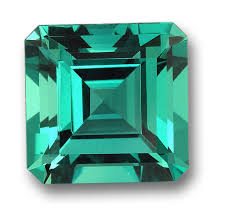
For more than 4000 years, the deep sparkling green color of emerald has been a symbol of eternal spring and immortality.
Shrouded in myth and legend, emerald is the birthstone of May and not just a beautiful gemstone. Prized by Egyptians, Romans, Aztecs, royalty in Europe, and today, gem connoisseurs worldwide.
Myths and legends
Spring is a time of growth and rejuvenation. Nothing reflects this more than the intense green hues of an emerald, May's birthstone.
Emeralds are considered by many cultures as a symbol of personal development. It was once believed that emeralds had the power to calm the soul and sharpen the wit.
Some people believe that wearing an emerald brings wisdom, growth and patience. And as all couples would probably agree, all of these qualities are important for lasting love. This may explain why a gift of an emerald is considered a symbol of love and devotion.
Emeralds have long been considered to have healing powers. While we know today that emeralds are not a cure for all medical and psychological problems, many people still use emeralds to soothe their eyes and give them good health. In fact, the color green has long been considered a calming color and it is no coincidence that the "green rooms" in theaters and television studios are supposed to provide a relaxing effect after stress and irritated eyes from studio and stage lights.
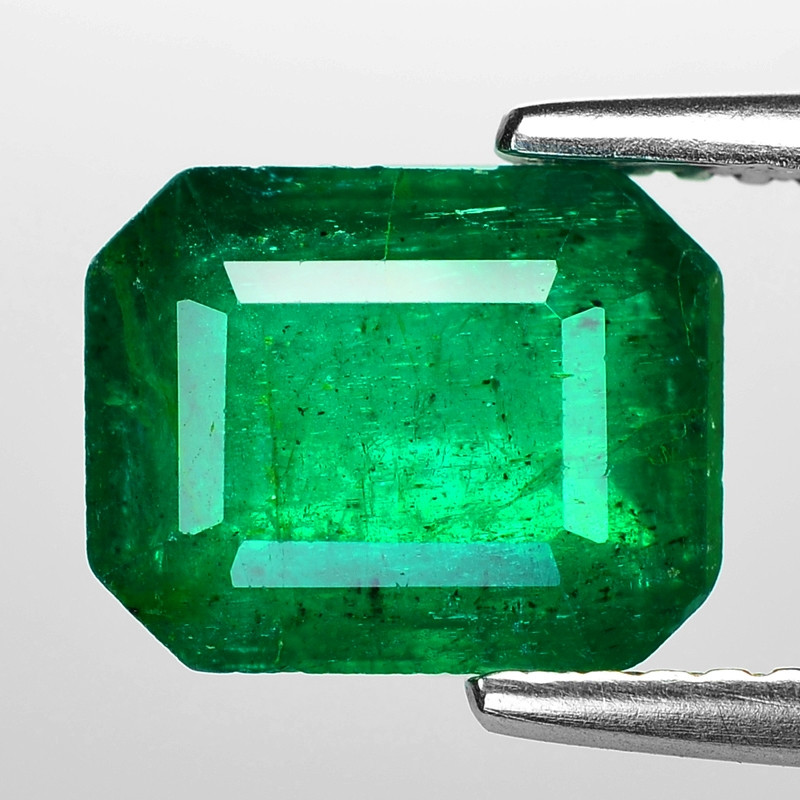
Emerald is a truly ancient gemstone, and there is archaeological evidence that the Babylonians may have marketed emeralds as early as 4000 BC.
The history of Egyptian emeralds goes back over 4000 years. Located in Egypt's Eastern Desert region, miners braved extreme heat, scorpions and snakes to search for the "green fire."
The old mines in Egypt were rediscovered in 1818 by the French explorer Caillaud. He located the mine with the help of the Egyptian government and determined that emeralds were probably mined long after the kings and queens of Egypt ruled the country.
Emeralds were said to be the favorite gemstone of Cleopatra. She often wore lavish emerald jewelry and presented visiting dignitaries with large emeralds carved in her likeness when they left Egypt.
Egyptian emeralds were first mined about 2,000 years before Cleopatra's birth. During her reign, Cleopatra claimed these emerald mines as her property.
The Roman historian Pliny the Elder once said of emeralds, "nothing green is greener", and it was recorded that the Roman Emperor Nero, while watching the gladiator fights, wore glasses made of emeralds. However, gemologists now believe that this was highly unlikely because ancient Egyptian emerald green produced crystals were of insufficient size and clarity required for such an instrument. Historians now believe that beryl was instead the gemstone used.
Legends surrounding emeralds would not be complete without the infamous stories of the conquistadors. Hernando Cortés began his campaign against the Aztecs in 1519, and Francisco Pizarro began his military operation against the Incas in 1526. When Cortés planted the Spanish flag on Aztec soil, he snatched from the defeated emperor Moctezuma a huge pyramidal emerald so large that it could be seen from 300 meters away.
Emerald facts
The green color of emeralds is unparalleled in the gemstone kingdom. Its beautiful green color, combined with its rarity, makes emerald one of the world's most valuable gemstones. Interestingly, its name comes from the Greek word smaragdos, meaning green gem.
Emeralds are a member of the beryl family of minerals. Tiny traces of chromium, vanadium, and iron give emeralds their famous "green color." The green crystals grow slowly within metamorphic rocks and are limited in size by bedrock, making large emeralds rare and expensive.
Unlike other beryls, emeralds often have inclusions and small fractures. These are often called jardin, from the French word for "garden," because of their resemblance to foliage. For emeralds, the jardin is not seen as a negative aspect as it would be for many other gemstone varieties, but instead forms part of the emerald's character and can be used to ensure that it is a natural gemstone.
Although emerald is relatively hard and durable, it must be protected from hard blows because jardin is often found inside the stone, making it susceptible to breakage.
When buying emeralds, the most important thing is always color, while clarity and cut quality play a less important role. Traditionally, deep green is the most desired color in emeralds. Paler emeralds are sometimes called green beryls.
Emeralds from different locations can vary slightly in appearance, some of the main sources and varieties are described below.
Colombian emeralds
Known for their vivid green color, Colombian emeralds are usually of exceptional quality. Colombia is traditionally the best source for top quality emeralds.
The three historically important areas for emerald mining in Colombia are Muzo, Coscuez and Chivor.
The Muzo mine
The famous Muzo mines are located 16 miles north of Bogotá. Emerald crystals from Muzo tend to be more saturated in color than either Coscuez or Chivor. They are considered some of the finest emerald mines in the world.
Trapiche emeralds are a very uncommon, rare, prized form of emerald found only in the Muzo rock formations of Colombia. Iron-shaped rays emanating from the center in a hexagonal pattern characterize these emeralds. These rays act much like asterism, but unlike asterism, they are not caused by light reflection from small parallel inclusions, but black carbon impurities that happen to form in the same pattern.
Coscuez mine
Emerald crystals from Coscuez tend to exhibit a very wide range of colors but unfortunately they also tend to have more inclusions in them than those from Muzo.
Chivor mine
Chivor emeralds are best known for their blue hues and generally have fewer inclusions and a lighter color than both Coscuez or Muzo emeralds. The Chivor mining area is the smallest of the three and is separate from Muzo and Coscuez, which are adjacent to each other.
Brazilian emeralds
While Colombian emeralds are known for their vivid green color, Brazilian emeralds are known for their diversity of color, from light green to medium dark blue green. Emeralds were first discovered in Brazil about 500 years after the arrival of the Portuguese. However, it was not until 1963 that the first samples with commercial value were found in Bahia, near the city of Paraíso Norte in northern Brazil.
Pakistani emeralds
While an extremely harsh climate prevents the mining of emerald deposits at higher altitudes, at lower altitudes in Pakistan's Swat Valley are the Gujar Kili mine, and the ancient and historically significant Mingora mine. Severe weather conditions limit operations during the winter, making hand-dug production very limited. The government of Pakistan closely controls the extraction of emeralds from relatively new deposits discovered around 1960 in the Himalayan mountains.
Russian emeralds
Russian emeralds have long been valued for their excellent clarity, luster and forest green hues.
The largest and most famous source of Russian emeralds is the Mariinsky (St. Mary's) mine. This mine was discovered in 1833 near the village of Malysheva. The deposits were nationalized after World War I and emerald extraction ceased when Malysheva became a military security zone. Russian emeralds almost disappeared completely but thankfully Russian emerald is now back. Russian emeralds are mined from a large beryllium deposit and are one of the deepest colored gemstone mines in the world. Less than half a percent of the emerald crystals are suitable for faceting. As a result, Russian emeralds are a "must have" for every true emerald connoisseur.
Zambian emeralds
Zambian emeralds are of very high quality. Although Zambia has the world's second largest emerald deposit, it is very underdeveloped and mainly limited to small-scale mines in nearby Kagem, Kitwe, Miku and Mufulira in remote northern Zambia. Simple hand tools are primarily used to mine Zambian emerald, limiting supply while increasing its rarity and value.
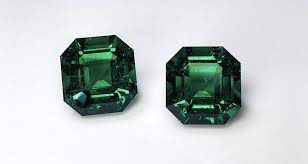
May birthdays fall right in the heart of spring, and the emerald is the perfect gemstone to symbolize and celebrate this month. Famous for its brilliant and beautiful green color, the emerald is often favored by the rich and famous. This beautiful gemstone fits perfectly in a beautiful pendant or admiring ring. Read more about the May birthstone below.
Emerald:
Basic facts:
Month stone: May
Origin: Afghanistan, Brazil, Colombia, China, Pakistan, Russia, Zambia & Zimbabwe
Colors: Green
Family: Beryl: Be3Al2Si6O18
Hardness: 7.5 - 8
Refractive Index: 1.56 – 1.60
Specific Gravity: 2.68 – 2.74
Treatment: Often treated with oil, but other types also occur to a lesser extent.
For more than 4000 years, the deep sparkling green color of emerald has been a symbol of eternal spring and immortality.
Shrouded in myth and legend, emerald is the birthstone of May and not just a beautiful gemstone. Prized by Egyptians, Romans, Aztecs, royalty in Europe, and today, gem connoisseurs worldwide.
Myths and legends
Spring is a time of growth and rejuvenation. Nothing reflects this more than the intense green hues of an emerald, May's birthstone.
Emeralds are considered by many cultures as a symbol of personal development. It was once believed that emeralds had the power to calm the soul and sharpen the wit.
Some people believe that wearing an emerald brings wisdom, growth and patience. And as all couples would probably agree, all of these qualities are important for lasting love. This may explain why a gift of an emerald is considered a symbol of love and devotion.
Emeralds have long been considered to have healing powers. While we know today that emeralds are not a cure for all medical and psychological problems, many people still use emeralds to soothe their eyes and give them good health. In fact, the color green has long been considered a calming color and it is no coincidence that the "green rooms" in theaters and television studios are supposed to provide a relaxing effect after stress and irritated eyes from studio and stage lights.
Emerald is a truly ancient gemstone, and there is archaeological evidence that the Babylonians may have marketed emeralds as early as 4000 BC.
The history of Egyptian emeralds goes back over 4000 years. Located in Egypt's Eastern Desert region, miners braved extreme heat, scorpions and snakes to search for the "green fire."
The old mines in Egypt were rediscovered in 1818 by the French explorer Caillaud. He located the mine with the help of the Egyptian government and determined that emeralds were probably mined long after the kings and queens of Egypt ruled the country.
Emeralds were said to be the favorite gemstone of Cleopatra. She often wore lavish emerald jewelry and presented visiting dignitaries with large emeralds carved in her likeness when they left Egypt.
Egyptian emeralds were first mined about 2,000 years before Cleopatra's birth. During her reign, Cleopatra claimed these emerald mines as her property.
The Roman historian Pliny the Elder once said of emeralds, "nothing green is greener", and it was recorded that the Roman Emperor Nero, while watching the gladiator fights, wore glasses made of emeralds. However, gemologists now believe that this was highly unlikely because ancient Egyptian emerald green produced crystals were of insufficient size and clarity required for such an instrument. Historians now believe that beryl was instead the gemstone used.
Legends surrounding emeralds would not be complete without the infamous stories of the conquistadors. Hernando Cortés began his campaign against the Aztecs in 1519, and Francisco Pizarro began his military operation against the Incas in 1526. When Cortés planted the Spanish flag on Aztec soil, he snatched from the defeated emperor Moctezuma a huge pyramidal emerald so large that it could be seen from 300 meters away.
Emerald facts
The green color of emeralds is unparalleled in the gemstone kingdom. Its beautiful green color, combined with its rarity, makes emerald one of the world's most valuable gemstones. Interestingly, its name comes from the Greek word smaragdos, meaning green gem.
Emeralds are a member of the beryl family of minerals. Tiny traces of chromium, vanadium, and iron give emeralds their famous "green color." The green crystals grow slowly within metamorphic rocks and are limited in size by bedrock, making large emeralds rare and expensive.
Unlike other beryls, emeralds often have inclusions and small fractures. These are often called jardin, from the French word for "garden," because of their resemblance to foliage. For emeralds, the jardin is not seen as a negative aspect as it would be for many other gemstone varieties, but instead forms part of the emerald's character and can be used to ensure that it is a natural gemstone.
Although emerald is relatively hard and durable, it must be protected from hard blows because jardin is often found inside the stone, making it susceptible to breakage.
When buying emeralds, the most important thing is always color, while clarity and cut quality play a less important role. Traditionally, deep green is the most desired color in emeralds. Paler emeralds are sometimes called green beryls.
Emeralds from different locations can vary slightly in appearance, some of the main sources and varieties are described below.
Colombian emeralds
Known for their vivid green color, Colombian emeralds are usually of exceptional quality. Colombia is traditionally the best source for top quality emeralds.
The three historically important areas for emerald mining in Colombia are Muzo, Coscuez and Chivor.
The Muzo mine
The famous Muzo mines are located 16 miles north of Bogotá. Emerald crystals from Muzo tend to be more saturated in color than either Coscuez or Chivor. They are considered some of the finest emerald mines in the world.
Trapiche emeralds are a very uncommon, rare, prized form of emerald found only in the Muzo rock formations of Colombia. Iron-shaped rays emanating from the center in a hexagonal pattern characterize these emeralds. These rays act much like asterism, but unlike asterism, they are not caused by light reflection from small parallel inclusions, but black carbon impurities that happen to form in the same pattern.
Coscuez mine
Emerald crystals from Coscuez tend to exhibit a very wide range of colors but unfortunately they also tend to have more inclusions in them than those from Muzo.
Chivor mine
Chivor emeralds are best known for their blue hues and generally have fewer inclusions and a lighter color than both Coscuez or Muzo emeralds. The Chivor mining area is the smallest of the three and is separate from Muzo and Coscuez, which are adjacent to each other.
Brazilian emeralds
While Colombian emeralds are known for their vivid green color, Brazilian emeralds are known for their diversity of color, from light green to medium dark blue green. Emeralds were first discovered in Brazil about 500 years after the arrival of the Portuguese. However, it was not until 1963 that the first samples with commercial value were found in Bahia, near the city of Paraíso Norte in northern Brazil.
Pakistani emeralds
While an extremely harsh climate prevents the mining of emerald deposits at higher altitudes, at lower altitudes in Pakistan's Swat Valley are the Gujar Kili mine, and the ancient and historically significant Mingora mine. Severe weather conditions limit operations during the winter, making hand-dug production very limited. The government of Pakistan closely controls the extraction of emeralds from relatively new deposits discovered around 1960 in the Himalayan mountains.
Russian emeralds
Russian emeralds have long been valued for their excellent clarity, luster and forest green hues.
The largest and most famous source of Russian emeralds is the Mariinsky (St. Mary's) mine. This mine was discovered in 1833 near the village of Malysheva. The deposits were nationalized after World War I and emerald extraction ceased when Malysheva became a military security zone. Russian emeralds almost disappeared completely but thankfully Russian emerald is now back. Russian emeralds are mined from a large beryllium deposit and are one of the deepest colored gemstone mines in the world. Less than half a percent of the emerald crystals are suitable for faceting. As a result, Russian emeralds are a "must have" for every true emerald connoisseur.
Zambian emeralds
Zambian emeralds are of very high quality. Although Zambia has the world's second largest emerald deposit, it is very underdeveloped and mainly limited to small-scale mines in nearby Kagem, Kitwe, Miku and Mufulira in remote northern Zambia. Simple hand tools are primarily used to mine Zambian emerald, limiting supply while increasing its rarity and value.