
October Birthstones:
Tourmaline and opal birthstones come in a rainbow of shades and color combinations, giving October babies a variety of options.
Between tourmaline (whose color depends on trace elements in its chemical mix) and opal (which diffracts light to show a play of multiple colors), October birthstones offer a full spectrum of gemstones to suit everyone's personal taste.
Tourmaline:
Basic facts:
Month stone: October
Origin: Afghanistan, Brazil, Kenya, Madagascar, Mozambique, Nigeria, Sri Lanka, Tanzania, Zambia & USA
Colors: Various
Family: Tourmaline
Hardness: 7 – 7.5
Refractive Index: 1.61 – 1.66
Specific Gravity: 2.82 – 3.32
Treatment: Usually not treated
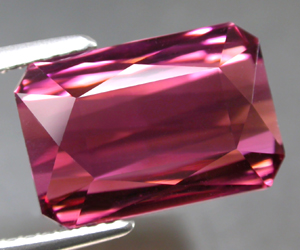
Tourmaline has a colorful and romantic history and comes in an incredible array of beautiful colors. Tourmaline is found in a palette of over 100 different shades, and is one of the world's most diverse gemstones. This has resulted in the nickname "chameleon gem", which is doubly appropriate when you consider that a major source of tourmaline is Madagascar, home to more than half of the world's chameleon species.
The name tourmaline comes from the Sinhalese word tourmali (to mix), due to a historical tendency for tourmaline to be mixed and mistaken for other gemstone varieties.
Myths and legends
Sri Lanka (formerly Ceylon) was partly responsible for tourmaline's resurgence in Europe when tourmaline gems were sold to Dutch traders who imported them to the West in the 15th century.
The Dutch were the first to discover that this precious stone, like quartz, had a unique property, piezoelectricity. When tourmaline is heated or rubbed, an electrical charge is created, and the stone becomes a magnet that attracts other light materials.
One monarch who was particularly enchanted by tourmaline was the Empress Dowager Tz'u Hsi, the last empress of China. She loved tourmaline so much, and was so rich, that she bought almost a ton of tourmaline from San Diego, California's pegmatite district.
Tourmaline facts
Due to their crystal size, tourmalines are often cut into long rectangular shapes along the crystal axis.
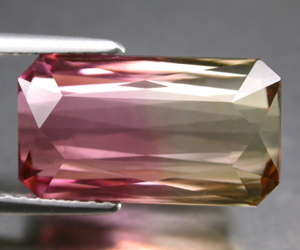
Tourmaline crystals occur in granitic pegmatite veins in the large gemstone districts in eg Minas Gerais in Brazil, San Diego County in the USA, and the East African countries of Kenya, Tanzania, Mozambique, Malawi, Madagascar and Nigeria.
Tourmaline is a group of mineral species. But it is the mineral elbaite (named after the island of Elba off the nearby west coast of Italy, where it was discovered) that is responsible for almost all of tourmaline's most famous gemstone varieties.
Tourmaline very rarely has a cat's eye effect. Chatoyancy or cat's eye is a reflective effect that appears as a single bright band of light across the surface of a gemstone.
All tourmalines can display Pleochroism, which means that the stone can show color changes when viewed from different angles. However, this can vary from stone to stone. In some cases this effect is barely noticeable, while in others it is strongly evident.
Green tourmaline
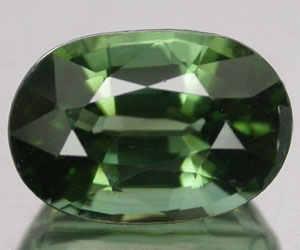
Normally free of inclusions, green tourmaline offers consumers everything they want in an emerald, but with better clarity. Green Tourmaline has become popular with collectors in recent years. Chrome tourmaline is an intense green variety of tourmaline found in East Africa. Despite the name, most chrome tourmalines are actually colored by vanadium.
Indicolite tourmaline
Ranging in color from light to deep blue, indicolite tourmaline is rare and high-quality specimens are highly sought after collectors' items. Indicolite is strongly pleochroic (shows different hues when viewed from different angles). The Romans reportedly used indicolite, especially in carved brooches that often bore images of animals, because they believed it had strange occult powers. It was rediscovered in Europe in 1703 when the Dutch imported indicolite they had obtained in Sri Lanka. Generally, only indicolite stones under one carat are available and as a result larger sizes are very rare and sought after.
Two colored tourmaline
It wasn't until the 1970s that two-tone tourmaline began to be used in jewelry.
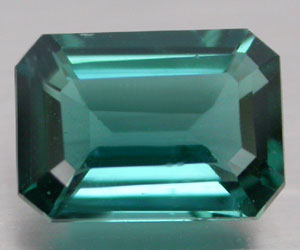
Due to its complex chemical composition, tourmaline comes in many colors. Two colored tourmaline is due to differences caused by environmental changes. At different times, different color-producing elements (iron, manganese, titanium, chromium and vanadium) were incorporated into the crystal, leading to different color layers. Purposefully cut to display this feature, bicolor tourmaline displays a beautiful contrast between its colors, usually pink and green, in a gemstone.
Two colored tourmaline should not be confused with watermelon tourmaline. Watermelon tourmaline is a crystal where the inner part shows pink surrounded by green. They are usually thinly sliced in sections, like a loaf of bread, and polished to show the "watermelon" effect.
Paraíba tourmaline
The world was introduced to Paraíba tourmaline by Brazilian mine owner Heitor Dimas Barbosa in 1989. Convinced that there were fine stones in the mountains of the Brazilian state of Paraíba, it took him five years before he managed to unearth his first Paraíba tourmaline crystal.
While Paraíba tourmalines were first found in Brazil's Paraíba state, stones of the same color and composition have now been found in nearby Rio Grande do Norte State (Brazil). The first African find was discovered in 2001 at the Edoukou mine in Oyo (Nigeria), near the border with Benin. Also in 2001, farmers in Mozambique's Nampula province of Paraíba discovered tourmalines. However, this material did not enter the market on a large scale until 2006.
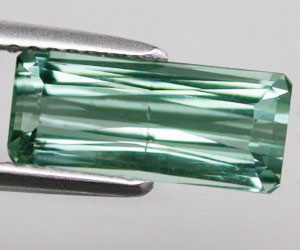
When the Paraíba tourmaline was first discovered in Brazil, it was different from all other tourmaline varieties previously known. The color of this gemstone ranges from intense emerald green through Windex blue to a rich sapphire blue and continues along the spectrum to indigo, intense violet (similar to fine amethyst), purple and even red.
Paraíba tourmaline has an extremely good luster even in low light. Top Brazilian paraíbas can fetch as much as $USD50,000 per carat or more on the wholesale gemstone market.
Paraíba tourmaline gets its spectacular colors from small amounts of copper, with manganese and iron. Greater amounts of copper produce more blue and turquoise colors, while elevated manganese produces more purple and red hues. While most Paraíba tourmalines are under one carat, gems from Mozambique can reach sizes up to 40 carats or more. As with emeralds, inclusions are common in Paraíba tourmaline, making its color the main beauty. Its beautiful bright colors have made Paraíba tourmaline hugely popular within a short time.
Rubellite tourmaline
Rubellite, deriving its name from the Latin word rubellus, meaning "coming from red" is a lustrous, reddish pink and purple-toned tourmaline. During the 17th century, on behalf of the Tsar of Russia, many gemstone jewelry were designed for the Imperial Crown Court. However, gems originally thought to be rubies have later been found to be Rubellite.
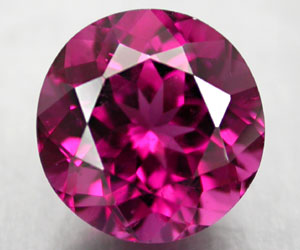
Extremely rare, rubellite has taken the jewelry world by storm in recent years following the discovery of new deposits. Madagascar rubellite comes from mines 4 miles outside the town of Betafo in Antananarivo province in Madagascar's central highlands. Interestingly, this mine produces some truly unique rubellites whose color is close to the famous rubies.
The largest rubellite finds are from the 19th century when they were discovered in Brazil. This country continues to be a major supplier, especially in the state of Minas Gerais. Some of the finest stones came from Ouro Fino in Coronel, Murta (Minas Gerais). Discovered around 1983 and already in 1985 the mine was developed. Ouro Fino rubellite has achieved legendary status in the gemstone world.
Surprisingly, Southern California's Pala District was also once an important source, especially in the late 19th and early 20th centuries. The blue-capped rubellite crystals from the tourmaline queen mine are world famous among mineral collectors.
In the summer of 1998, a new rubellite deposit was discovered in an agricultural area 4 miles from the ancient city of Ibadan in Nigeria, West Africa. This material was exceptionally clean with top color. Within just a few short years, over 1,000 kg of rough rock had been taken out of the ground, and just as quickly as it appeared, the mine was fully developed.
In 2007, another important find was made, this time near Chimoio, Mozambique (near the border with Zimbabwe).
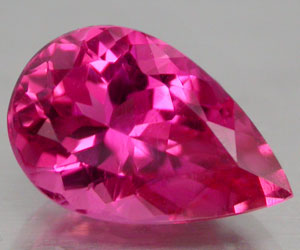
With the exception of ruby and red spinel, rubellite is the only gemstone that occurs in such a rich, dark red color. Like emerald, inclusions in rubellite are common. The chemical element that colors rubellite (manganese) actually causes the growing crystal to become internally impure (ie, the more manganese present, the darker the red color, and the more inclusions in the final crystal). It is therefore extremely rare to find a colorful rubellite that is internally clean. Rubellites also tend to have more natural inclusions, as they form near the center of the crystal pocket, and thus receive more stress and pressure during formation. However, rubellite is a very durable gemstone, well suited for everyday jewelry.
Opal:
Basic facts:
Month stone: October
Origin: Australia, Brazil, Ethiopia, Mexico, Peru, South Africa, Sudan, Tanzania & Zimbabwe
Colors: Various
Family: Opal: SiO2 + H2O
Hardness: 5.5 - 6.5
Refractive Index: 1.37 – 1.52
Specific Gravity: 1.98 – 2.50
Treatment: Can be treated
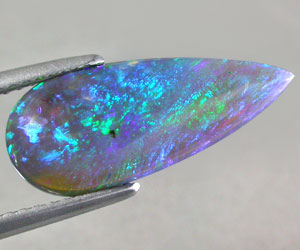
One of the world's most sought-after gemstones, opal whose name evolved from the Roman opalus derived from the Greek opallios, meaning "to see a change of color." The Greek word was a modification of the ancient Indian Sanskrit name for Opal, Upala, which meant "precious stone."
Myths and legends
Historically, opal has been a good luck charm that brought beauty, success and luck to the wearer. The early Greeks believed opals embodied foresight and prophecy.
The Romans also loved opals and believed they were a symbol of hope and purity. The Arabs believed that opals must have fallen from the sky in lightning bolts. According to Arabic tradition, opals are believed to prevent lightning strikes, protect its wearer from all unwanted elements in their day to day lives and provide a cloak of invisibility to the wearer when desired.
Opal made headlines in the 1890s with the first specimens of Australian opal. The Hungarians declared that the new Australian variety was not genuine because opals with such a fusion of fire and color had never been seen before. According to Koori (Aboriginal) legend, the creator came down to earth on a rainbow to bring a message of peace to all people. At the point where his feet touched the ground, the stones became alive and began to sparkle in all the colors of the rainbow, giving rise to Australian opals. Today, opals are one of Australia's national treasures and one of the world's most valuable gemstones.
Scandinavian women still wear opal hair bands to ward off the appearance of gray hair, while some people believe that this gemstone has therapeutic properties that rejuvenate the spirit and strengthen the mind.
Opal facts
Opals have a rainbow-like luster that changes with the angle you look at the stone - called play of color. This effect is similar to the rainbow colors that appear on a soap bubble, only much more dramatic. This should not be confused with opalescence, which is the milky blue or pearl appearance of opal caused by scattering of light.
The physical structure of opal is unique. Small precipitated spheres of silica form a pyramidal lattice interspersed with water. Small natural faults in this mesh cause the characteristic play of colors.
Opals are usually classified according to the "potch" (the base stone, also called "matrix") on which the opal is formed. For example, black opal has a black potch, a semi black opal a potch darker than gray, but not quite black, a white opal a white potch.
Opal actually exhibits many different colors including cherry-colored specimens that match the best rubies, fiery-orange opals that sparkle like mandarin garnet, tropical blue stones as intense as chalcedony, and even beautiful pinks and greens.
Today, about 95% of the world's opals come from a handful of prominent mining areas in Australia, namely Lightning Ridge, Coober Pedy, Andamooka and Mintabie.
Black Opal
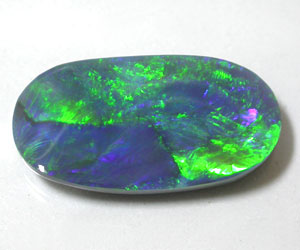
Black opal is found mainly at Lightning Ridge in New South Wales, Australia. Known as the "King of Opals," Lightning Ridge black opal has been sought after since its discovery in 1902. About 90 miles north of Sydney is Lightning Ridge (a town of about 15,000 people) which is the world's largest source of the finest black opals.
This magnificent gemstone is the most sought after form of opal. Its dark background color sets spectral colors on fire much like a storm cloud behind a rainbow (the black background provides contrast and intensity to this opal's color spectacle). So valued is black opal that even very thin slices are made into duplicates or triplets to give them enough strength and depth to be included in gold rings and other jewelry.
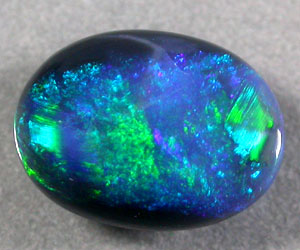
The black opal mining within the Lightning Ridge and the majority of Australia's opal fields lie in a geological phenomenon known as the Great Australian Basin. The basin was formed from the sediments of a large inland sea that existed over 140 million years ago. About 120 million years later, sandstones have been deposited by watercourses over the top of these sedimentary rocks. Their silica is filtered down to cavities in the older bedrock in the form of a gel. The silica hardened and formed around a nucleus, creating the opal's characteristic regular spheres and cavities. It is the diffraction of light through these transparent surfaces that produces the opal brilliant play of color.
Unfortunately, all Australian opals are becoming increasingly rare, especially those from Lightning Ridge. The old fields on Lightning Ridge that yielded large cabochon stones are nearly exhausted, with only marginal areas currently being worked. Although the government has opened many new prospective areas, there have been no significant new deposits to date. Opal production at Lightning Ridge is half of what it was ten years ago.
Boulder Opal
Boulder opal is found sparsely distributed over a large area of Australian ironstone or boulder country where opal (silica mix) fills veins, cracks, cavities and fissures in ironstone boulders. Opal boulder stone is always ground to include the brown host stone. One of the largest boulder opal areas is located northwest of Lightning Ridge in western Queensland. The Queensland Boulder Opal areas comprise a large area centered on the town of Quilpie and extend as far north as Winton and south to Cunamulla.
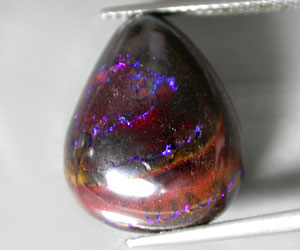
Known for its vivid flaming clear rich colors, this variety is in very high demand and very popular. Interest in Queensland Boulder Opal has increased significantly over the past 20 years.
Fire Opal
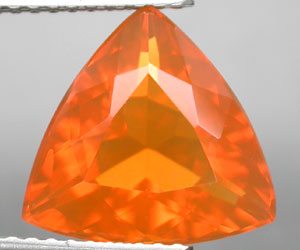
Fire opals are aptly named for their fiery cherries, yellow tans and deep tangerines. Unique and mysterious, fire opal is remarkable in that, unlike many other opals, its color play is minimal. Also known as Mexican opal, Mexican fire opal, Tanzanian fire opal, cherry fire opal, Ethiopian fire opal, Brazilian fire opal or sun opal, the legendary popularity of the place comes from its breathtaking brilliance, opalescence, extraordinary fiery hues and amazing clarity.
Fire opals have been highly valued in America and the Aztec Indians called this stone Quetzalitzlipyollitili or ;gemstone of the bird of paradise;. For the Aztec Indians, the fire opal was a strong symbol of love and lust. While fire opal is mainly found in Mexico (and sometimes Australia), this gemstone has recently been found in Tanzania, Ethiopia, Mali and now Brazil. While opal has been mined in Brazil since about 1945, production has always been very limited, making it difficult to secure commercial quantities. Today the Piaui state is increasingly internationally recognized for its opals with their quality comparing favorably with all the finest Australian opals.
Green Opal
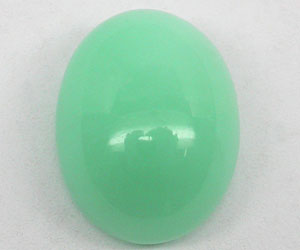
Discovered in the 1960s, green opal is a green translucent opal that resembles chrysoprase or jade and is commonly called PRASEM opal or chrysopal due to its resemblance to chrysoprase. It is mined in the Arusha region of Tanzania (the same region as tanzanite). Although this gemstone does not show the same color play found in some opals, its mint to apple green color has made it a very popular opal for jewelry. Trace amounts of nickel give this opal its unique color.
Jelly Opal
Jelly opal (also known as water opal or crystal opal) is mined in Mexico and Australia. Offering an attractive mix of indistinct colors, it is a transparent pure opal with a gelatinous appearance and sometimes pronounced opalescence (bluish sheen). The play of color is a subtle luster that dances across the entire stone rather than distinct color fields. When held in direct light, a jelly opal can display some of the most intense opal colors.
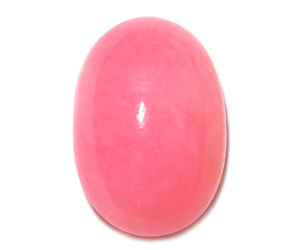
Peruvian Opal
It comes from the Andes and was appreciated by the ancient Inca Indians. Peruvian opal is extremely rare and exhibits an exquisite translucent color. Although normally found in blue or pink colors (also sometimes green).
Semi Black Opal
With a lighter transparency than black opal, semi black opal has a color darker than black, but not quite black. Opacity is the key that differentiates black from semi black with black opal appearing more opaque than semi black opal. Semi black opal was discovered at Andamooka in the 1930s. Located 40 miles north by road from Adelaide, South Australia, Andamooka is a typical dusty "Wild West" desert town. While Andamooka opals are still world famous, only a small amount of opal is mined from Andamooka due to high logistical costs due to its remoteness. Andamooka opal is typically of exceptionally high quality, but has become more difficult to purchase in recent years.
White Opal
White opal is transparent with a creamy appearance that dominates broken colors. While all of the Australian opal fields produce white opal, the majority is found in Coober Pedy.
Tourmaline and opal birthstones come in a rainbow of shades and color combinations, giving October babies a variety of options.
Between tourmaline (whose color depends on trace elements in its chemical mix) and opal (which diffracts light to show a play of multiple colors), October birthstones offer a full spectrum of gemstones to suit everyone's personal taste.
Tourmaline:
Basic facts:
Month stone: October
Origin: Afghanistan, Brazil, Kenya, Madagascar, Mozambique, Nigeria, Sri Lanka, Tanzania, Zambia & USA
Colors: Various
Family: Tourmaline
Hardness: 7 – 7.5
Refractive Index: 1.61 – 1.66
Specific Gravity: 2.82 – 3.32
Treatment: Usually not treated
Tourmaline has a colorful and romantic history and comes in an incredible array of beautiful colors. Tourmaline is found in a palette of over 100 different shades, and is one of the world's most diverse gemstones. This has resulted in the nickname "chameleon gem", which is doubly appropriate when you consider that a major source of tourmaline is Madagascar, home to more than half of the world's chameleon species.
The name tourmaline comes from the Sinhalese word tourmali (to mix), due to a historical tendency for tourmaline to be mixed and mistaken for other gemstone varieties.
Myths and legends
Sri Lanka (formerly Ceylon) was partly responsible for tourmaline's resurgence in Europe when tourmaline gems were sold to Dutch traders who imported them to the West in the 15th century.
The Dutch were the first to discover that this precious stone, like quartz, had a unique property, piezoelectricity. When tourmaline is heated or rubbed, an electrical charge is created, and the stone becomes a magnet that attracts other light materials.
One monarch who was particularly enchanted by tourmaline was the Empress Dowager Tz'u Hsi, the last empress of China. She loved tourmaline so much, and was so rich, that she bought almost a ton of tourmaline from San Diego, California's pegmatite district.
Tourmaline facts
Due to their crystal size, tourmalines are often cut into long rectangular shapes along the crystal axis.
Tourmaline crystals occur in granitic pegmatite veins in the large gemstone districts in eg Minas Gerais in Brazil, San Diego County in the USA, and the East African countries of Kenya, Tanzania, Mozambique, Malawi, Madagascar and Nigeria.
Tourmaline is a group of mineral species. But it is the mineral elbaite (named after the island of Elba off the nearby west coast of Italy, where it was discovered) that is responsible for almost all of tourmaline's most famous gemstone varieties.
Tourmaline very rarely has a cat's eye effect. Chatoyancy or cat's eye is a reflective effect that appears as a single bright band of light across the surface of a gemstone.
All tourmalines can display Pleochroism, which means that the stone can show color changes when viewed from different angles. However, this can vary from stone to stone. In some cases this effect is barely noticeable, while in others it is strongly evident.
Green tourmaline
Normally free of inclusions, green tourmaline offers consumers everything they want in an emerald, but with better clarity. Green Tourmaline has become popular with collectors in recent years. Chrome tourmaline is an intense green variety of tourmaline found in East Africa. Despite the name, most chrome tourmalines are actually colored by vanadium.
Indicolite tourmaline
Ranging in color from light to deep blue, indicolite tourmaline is rare and high-quality specimens are highly sought after collectors' items. Indicolite is strongly pleochroic (shows different hues when viewed from different angles). The Romans reportedly used indicolite, especially in carved brooches that often bore images of animals, because they believed it had strange occult powers. It was rediscovered in Europe in 1703 when the Dutch imported indicolite they had obtained in Sri Lanka. Generally, only indicolite stones under one carat are available and as a result larger sizes are very rare and sought after.
Two colored tourmaline
It wasn't until the 1970s that two-tone tourmaline began to be used in jewelry.
Due to its complex chemical composition, tourmaline comes in many colors. Two colored tourmaline is due to differences caused by environmental changes. At different times, different color-producing elements (iron, manganese, titanium, chromium and vanadium) were incorporated into the crystal, leading to different color layers. Purposefully cut to display this feature, bicolor tourmaline displays a beautiful contrast between its colors, usually pink and green, in a gemstone.
Two colored tourmaline should not be confused with watermelon tourmaline. Watermelon tourmaline is a crystal where the inner part shows pink surrounded by green. They are usually thinly sliced in sections, like a loaf of bread, and polished to show the "watermelon" effect.
Paraíba tourmaline
The world was introduced to Paraíba tourmaline by Brazilian mine owner Heitor Dimas Barbosa in 1989. Convinced that there were fine stones in the mountains of the Brazilian state of Paraíba, it took him five years before he managed to unearth his first Paraíba tourmaline crystal.
While Paraíba tourmalines were first found in Brazil's Paraíba state, stones of the same color and composition have now been found in nearby Rio Grande do Norte State (Brazil). The first African find was discovered in 2001 at the Edoukou mine in Oyo (Nigeria), near the border with Benin. Also in 2001, farmers in Mozambique's Nampula province of Paraíba discovered tourmalines. However, this material did not enter the market on a large scale until 2006.
When the Paraíba tourmaline was first discovered in Brazil, it was different from all other tourmaline varieties previously known. The color of this gemstone ranges from intense emerald green through Windex blue to a rich sapphire blue and continues along the spectrum to indigo, intense violet (similar to fine amethyst), purple and even red.
Paraíba tourmaline has an extremely good luster even in low light. Top Brazilian paraíbas can fetch as much as $USD50,000 per carat or more on the wholesale gemstone market.
Paraíba tourmaline gets its spectacular colors from small amounts of copper, with manganese and iron. Greater amounts of copper produce more blue and turquoise colors, while elevated manganese produces more purple and red hues. While most Paraíba tourmalines are under one carat, gems from Mozambique can reach sizes up to 40 carats or more. As with emeralds, inclusions are common in Paraíba tourmaline, making its color the main beauty. Its beautiful bright colors have made Paraíba tourmaline hugely popular within a short time.
Rubellite tourmaline
Rubellite, deriving its name from the Latin word rubellus, meaning "coming from red" is a lustrous, reddish pink and purple-toned tourmaline. During the 17th century, on behalf of the Tsar of Russia, many gemstone jewelry were designed for the Imperial Crown Court. However, gems originally thought to be rubies have later been found to be Rubellite.
Extremely rare, rubellite has taken the jewelry world by storm in recent years following the discovery of new deposits. Madagascar rubellite comes from mines 4 miles outside the town of Betafo in Antananarivo province in Madagascar's central highlands. Interestingly, this mine produces some truly unique rubellites whose color is close to the famous rubies.
The largest rubellite finds are from the 19th century when they were discovered in Brazil. This country continues to be a major supplier, especially in the state of Minas Gerais. Some of the finest stones came from Ouro Fino in Coronel, Murta (Minas Gerais). Discovered around 1983 and already in 1985 the mine was developed. Ouro Fino rubellite has achieved legendary status in the gemstone world.
Surprisingly, Southern California's Pala District was also once an important source, especially in the late 19th and early 20th centuries. The blue-capped rubellite crystals from the tourmaline queen mine are world famous among mineral collectors.
In the summer of 1998, a new rubellite deposit was discovered in an agricultural area 4 miles from the ancient city of Ibadan in Nigeria, West Africa. This material was exceptionally clean with top color. Within just a few short years, over 1,000 kg of rough rock had been taken out of the ground, and just as quickly as it appeared, the mine was fully developed.
In 2007, another important find was made, this time near Chimoio, Mozambique (near the border with Zimbabwe).
With the exception of ruby and red spinel, rubellite is the only gemstone that occurs in such a rich, dark red color. Like emerald, inclusions in rubellite are common. The chemical element that colors rubellite (manganese) actually causes the growing crystal to become internally impure (ie, the more manganese present, the darker the red color, and the more inclusions in the final crystal). It is therefore extremely rare to find a colorful rubellite that is internally clean. Rubellites also tend to have more natural inclusions, as they form near the center of the crystal pocket, and thus receive more stress and pressure during formation. However, rubellite is a very durable gemstone, well suited for everyday jewelry.
Opal:
Basic facts:
Month stone: October
Origin: Australia, Brazil, Ethiopia, Mexico, Peru, South Africa, Sudan, Tanzania & Zimbabwe
Colors: Various
Family: Opal: SiO2 + H2O
Hardness: 5.5 - 6.5
Refractive Index: 1.37 – 1.52
Specific Gravity: 1.98 – 2.50
Treatment: Can be treated
One of the world's most sought-after gemstones, opal whose name evolved from the Roman opalus derived from the Greek opallios, meaning "to see a change of color." The Greek word was a modification of the ancient Indian Sanskrit name for Opal, Upala, which meant "precious stone."
Myths and legends
Historically, opal has been a good luck charm that brought beauty, success and luck to the wearer. The early Greeks believed opals embodied foresight and prophecy.
The Romans also loved opals and believed they were a symbol of hope and purity. The Arabs believed that opals must have fallen from the sky in lightning bolts. According to Arabic tradition, opals are believed to prevent lightning strikes, protect its wearer from all unwanted elements in their day to day lives and provide a cloak of invisibility to the wearer when desired.
Opal made headlines in the 1890s with the first specimens of Australian opal. The Hungarians declared that the new Australian variety was not genuine because opals with such a fusion of fire and color had never been seen before. According to Koori (Aboriginal) legend, the creator came down to earth on a rainbow to bring a message of peace to all people. At the point where his feet touched the ground, the stones became alive and began to sparkle in all the colors of the rainbow, giving rise to Australian opals. Today, opals are one of Australia's national treasures and one of the world's most valuable gemstones.
Scandinavian women still wear opal hair bands to ward off the appearance of gray hair, while some people believe that this gemstone has therapeutic properties that rejuvenate the spirit and strengthen the mind.
Opal facts
Opals have a rainbow-like luster that changes with the angle you look at the stone - called play of color. This effect is similar to the rainbow colors that appear on a soap bubble, only much more dramatic. This should not be confused with opalescence, which is the milky blue or pearl appearance of opal caused by scattering of light.
The physical structure of opal is unique. Small precipitated spheres of silica form a pyramidal lattice interspersed with water. Small natural faults in this mesh cause the characteristic play of colors.
Opals are usually classified according to the "potch" (the base stone, also called "matrix") on which the opal is formed. For example, black opal has a black potch, a semi black opal a potch darker than gray, but not quite black, a white opal a white potch.
Opal actually exhibits many different colors including cherry-colored specimens that match the best rubies, fiery-orange opals that sparkle like mandarin garnet, tropical blue stones as intense as chalcedony, and even beautiful pinks and greens.
Today, about 95% of the world's opals come from a handful of prominent mining areas in Australia, namely Lightning Ridge, Coober Pedy, Andamooka and Mintabie.
Black Opal
Black opal is found mainly at Lightning Ridge in New South Wales, Australia. Known as the "King of Opals," Lightning Ridge black opal has been sought after since its discovery in 1902. About 90 miles north of Sydney is Lightning Ridge (a town of about 15,000 people) which is the world's largest source of the finest black opals.
This magnificent gemstone is the most sought after form of opal. Its dark background color sets spectral colors on fire much like a storm cloud behind a rainbow (the black background provides contrast and intensity to this opal's color spectacle). So valued is black opal that even very thin slices are made into duplicates or triplets to give them enough strength and depth to be included in gold rings and other jewelry.
The black opal mining within the Lightning Ridge and the majority of Australia's opal fields lie in a geological phenomenon known as the Great Australian Basin. The basin was formed from the sediments of a large inland sea that existed over 140 million years ago. About 120 million years later, sandstones have been deposited by watercourses over the top of these sedimentary rocks. Their silica is filtered down to cavities in the older bedrock in the form of a gel. The silica hardened and formed around a nucleus, creating the opal's characteristic regular spheres and cavities. It is the diffraction of light through these transparent surfaces that produces the opal brilliant play of color.
Unfortunately, all Australian opals are becoming increasingly rare, especially those from Lightning Ridge. The old fields on Lightning Ridge that yielded large cabochon stones are nearly exhausted, with only marginal areas currently being worked. Although the government has opened many new prospective areas, there have been no significant new deposits to date. Opal production at Lightning Ridge is half of what it was ten years ago.
Boulder Opal
Boulder opal is found sparsely distributed over a large area of Australian ironstone or boulder country where opal (silica mix) fills veins, cracks, cavities and fissures in ironstone boulders. Opal boulder stone is always ground to include the brown host stone. One of the largest boulder opal areas is located northwest of Lightning Ridge in western Queensland. The Queensland Boulder Opal areas comprise a large area centered on the town of Quilpie and extend as far north as Winton and south to Cunamulla.
Known for its vivid flaming clear rich colors, this variety is in very high demand and very popular. Interest in Queensland Boulder Opal has increased significantly over the past 20 years.
Fire Opal
Fire opals are aptly named for their fiery cherries, yellow tans and deep tangerines. Unique and mysterious, fire opal is remarkable in that, unlike many other opals, its color play is minimal. Also known as Mexican opal, Mexican fire opal, Tanzanian fire opal, cherry fire opal, Ethiopian fire opal, Brazilian fire opal or sun opal, the legendary popularity of the place comes from its breathtaking brilliance, opalescence, extraordinary fiery hues and amazing clarity.
Fire opals have been highly valued in America and the Aztec Indians called this stone Quetzalitzlipyollitili or ;gemstone of the bird of paradise;. For the Aztec Indians, the fire opal was a strong symbol of love and lust. While fire opal is mainly found in Mexico (and sometimes Australia), this gemstone has recently been found in Tanzania, Ethiopia, Mali and now Brazil. While opal has been mined in Brazil since about 1945, production has always been very limited, making it difficult to secure commercial quantities. Today the Piaui state is increasingly internationally recognized for its opals with their quality comparing favorably with all the finest Australian opals.
Green Opal
Discovered in the 1960s, green opal is a green translucent opal that resembles chrysoprase or jade and is commonly called PRASEM opal or chrysopal due to its resemblance to chrysoprase. It is mined in the Arusha region of Tanzania (the same region as tanzanite). Although this gemstone does not show the same color play found in some opals, its mint to apple green color has made it a very popular opal for jewelry. Trace amounts of nickel give this opal its unique color.
Jelly Opal
Jelly opal (also known as water opal or crystal opal) is mined in Mexico and Australia. Offering an attractive mix of indistinct colors, it is a transparent pure opal with a gelatinous appearance and sometimes pronounced opalescence (bluish sheen). The play of color is a subtle luster that dances across the entire stone rather than distinct color fields. When held in direct light, a jelly opal can display some of the most intense opal colors.
Peruvian Opal
It comes from the Andes and was appreciated by the ancient Inca Indians. Peruvian opal is extremely rare and exhibits an exquisite translucent color. Although normally found in blue or pink colors (also sometimes green).
Semi Black Opal
With a lighter transparency than black opal, semi black opal has a color darker than black, but not quite black. Opacity is the key that differentiates black from semi black with black opal appearing more opaque than semi black opal. Semi black opal was discovered at Andamooka in the 1930s. Located 40 miles north by road from Adelaide, South Australia, Andamooka is a typical dusty "Wild West" desert town. While Andamooka opals are still world famous, only a small amount of opal is mined from Andamooka due to high logistical costs due to its remoteness. Andamooka opal is typically of exceptionally high quality, but has become more difficult to purchase in recent years.
White Opal
White opal is transparent with a creamy appearance that dominates broken colors. While all of the Australian opal fields produce white opal, the majority is found in Coober Pedy.