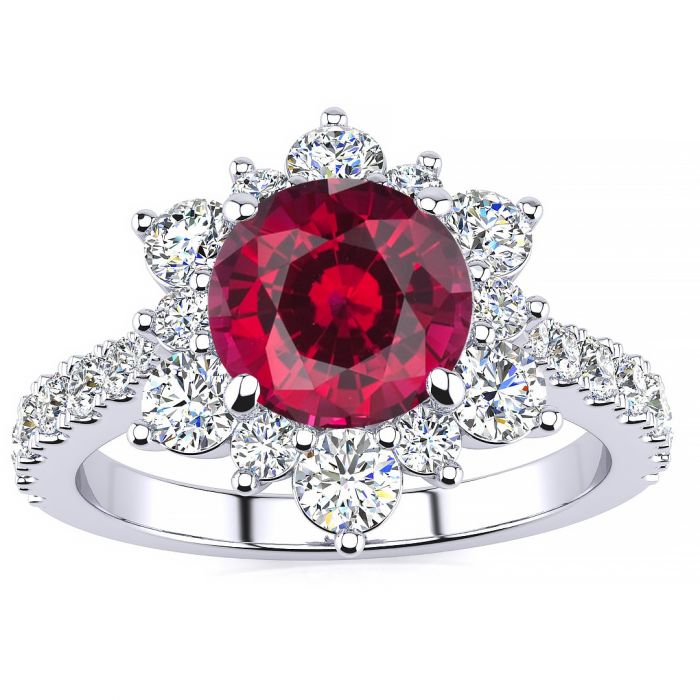
Ruby Buying Guide for Jewelry
When we think of red gemstones then undoubtably ruby comes to mind. Apart from their color, rubies are identical to sapphires and consist of the mineral we call corundum. The name corundum is believed to come from 3 ancient Tamil, Hindi and Sanskrit words for rubies and sapphires, kurundam, kurund and kuruvinda.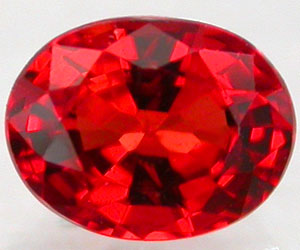
Basic Facts:
Month stone: July
Origin (most important): Afghanistan, Burma, India, Cambodia, Kenya, Madagascar, Mozambique, Sri Lanka, Tajikistan, Tanzania, Thailand and Vietnam.
Colors: Red (other corundum colors are classified as sapphire)
Family: Corundum: Al2O3
Hardness: 9
Refractive Index: 1.76 – 1.78
Specific Gravity: 3.97 – 4.05
Treatment: Often treated with heat/flux, but other types also occur to a lesser degree.
Ruby for Jewelry
Gemsheaven offers a jewelry design service at a very affordable cost. Click here for more information.
Ruby is one of the most popular gemstones for jewelry and it is suitable for every type of design such as engagement ring, wedding ring, pendant, solitair, pendant, earring, broaches, cocktail ring, bracelet and others. There are some things to consider when choosing your ruby.
Ruby Color:
Color is the most important factor in evaluating rubies. Colored by chromium, rubies were formed millions of years ago deep within the earth. Personal preference is of course subjective, but generally the best rubies have an intense, almost electric red effect in daylight due to fluorescence. The ideal ruby has an intense, rich crimson color without being too light or too dark. But since rubies come in many different colors and sizes, ultimately your personal preferences should be your primary concern. Remember, beauty is in the eye of the beholder.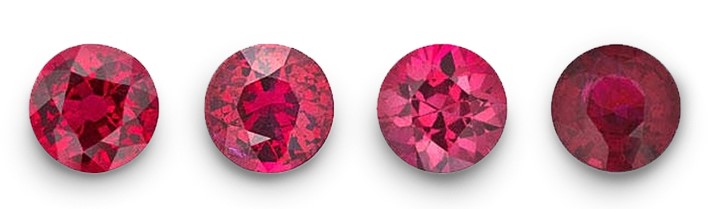
Ruby Clarity:
Extremely few rubies crystallize undisturbed, so a whole host of small irregularities (inclusions) is a hallmark of their formation. Far from being flaws, inclusions are a fascinating hallmark of authenticity that ties a ruby's natural relationship to the earth. Clarity is therefore less important in rubies than, for example, in sapphires.
Ruby Cut/Shapes:
Ruby is a hard crystal and is therefore suitable to be cut into any type of shapes such as oval, round, octagon, trilliant, pear and more. Oval shaped rubies have always been the most popular shape for single stone rings and pendants. Smaller round shaped rubies are also extremely popular as accent stones in all type of jewelry. With the availability of rubies in all types of shapes, it is really up to your imagination and personal preference of which shape to use for your jewelry design.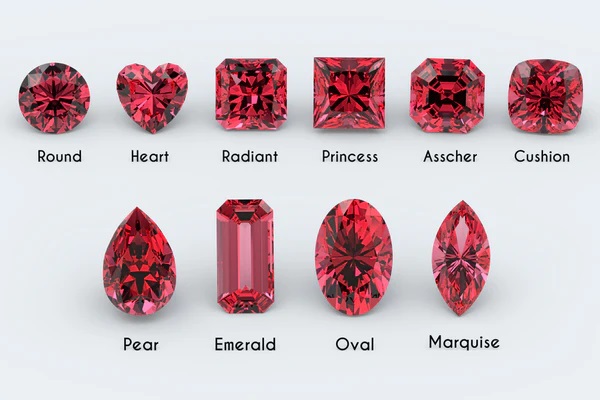
Ruby Weight:
In general, with any colored gemstone; the bigger the stone, the higher the price. There are factors like clarity, the quality of the cut, color hue etc to consider but carat size will always be important.
Finding a high-quality ruby over 1 carat is very difficult and as they increase in size, they increase in price and value significantly. A 2 carat ruby will be a lot more expensive than simply twice the price of a 1 carat ruby gemstone all things being equal with color and quality.
Ruby Treatment:
Rubies are usually heat treated in one way or another to improve the overall appearance of the gem. Less than 1% of the rubies available in the market today are untreated, making these type of rubies extremely rare and expensive.
The demand for natural ruby gems far exceeds the supply, and many former producing locations are completely mined out such as Thailand and Cambodia. In 2004 gem treaters in Chanthaburi, Thailand came up with an innovated treatment that highly increased the supply of ruby to the market. This treatment is called flux treatment and involves treating lower quality rubies with a mixture of heat and a filler (usually borax). This treatment is permanent, but any reputable seller should fully disclose any type of treatment done.
Ruby Price:
As mentioned, price of rubies increases significantly as the stones get bigger. A 2 carat ruby will be a lot more expensive than simply twice the price of a 1 carat ruby gemstone all things being equal with color and quality.
It is very difficult to give exact price ranges as this varies on an ongoing basis and also depends on other factors such as cut, clarity, luster etc, but a general guide is as follows:
Natural untreated rubies:
1 carat - $3,000 - $40,000 per carat
Natural heat treated rubies:
1 carat - $100 - $5,000 per carat
Natural flux heat treated rubies:
1 carat - $20 - $100 per carat
Ruby Hardness:
Ruby is a very durable stone with a hardness of 9 on Mohs hardness scale. Ruby is perfect for any type of jewelry such as rings, earrings, pendants, bracelets and more.
Ruby Birthstone:
Ruby is the birthstone of July and makes a perfect gift for anyone celebrating a birthday in that month. 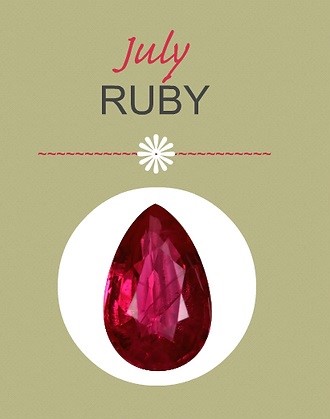
Ruby Zodiac Stone:
Ruby is most suitable for people sharing the Zodiac sign Cancer, June 22 – July 22.
Ruby Wedding Stone:
The ruby is the traditional gemstone gift for the 15th and 40th wedding anniversaries.
Which Jewelry Type fits Ruby?
With its high hardness/durability, ruby is perfect for any type of jewelry. In recent years ruby has also become more and more popular as a wedding ring stone instead of the traditional diamond. 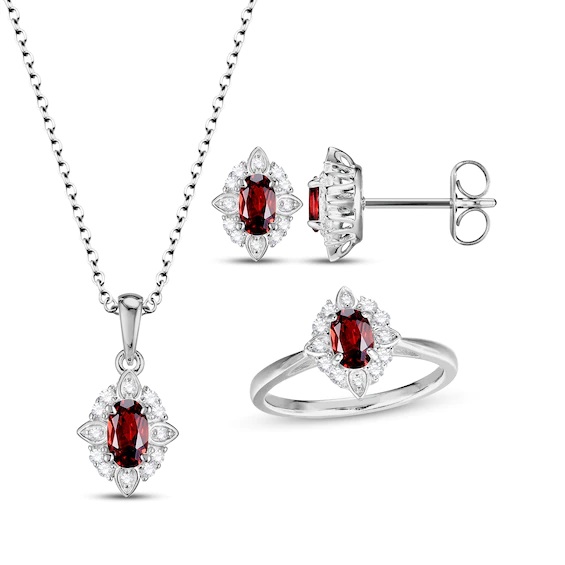
What metal is best for Ruby?
Rubies with their striking red color looks equally good in both yellow and white gold. The color of ruby is complemented by the yellow and white gold color.
Silver is an incredibly popular metal for ruby gems as it both compliments the color hue of ruby, as well as being more affordable than gold. Ruby is suitable for all type of silver jewelry such as rings, earrings, pendants, bracelets and more. 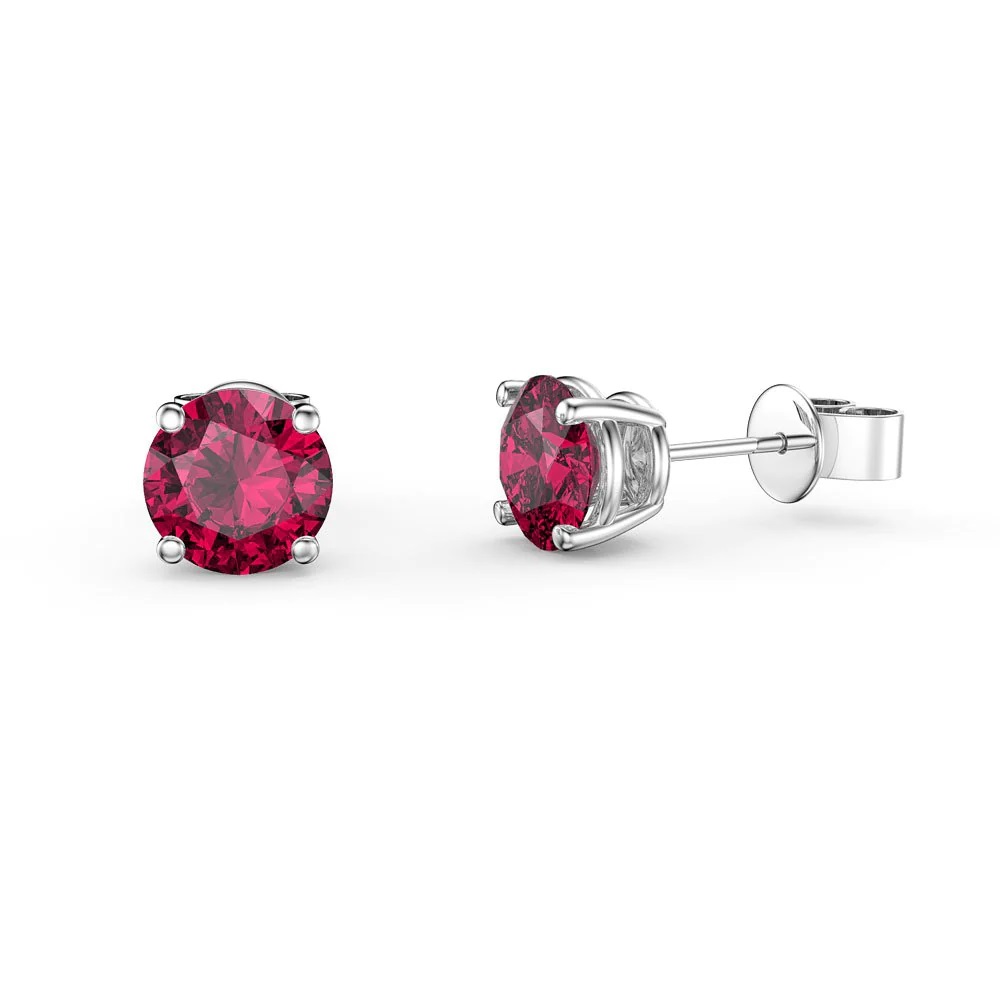
Caring for your Ruby Jewelry:
Ruby has a hardness of 9 on Mohs hardness scale which makes it strong enough to be used in all type of jewelry worn on a daily basis. However, as with any type of gemstone jewelry proper care should be taken.
Ruby can be safely, simply, and effectively cleaned with warm soapy water and a soft brush, such as a toothbrush. Steam cleaners should not be used to clean flux/heat treated rubies as it could damage the stones.
In addition to regular cleaning, take extra care while wearing the stone. Avoid bumping or scratching the stone against a rough surface. When storing the ruby, store it separately from softer stones and metals as the harder ruby could scratch their surfaces.
Summary:
Ruby is a perfect gemstone for any type of jewelry including wedding rings. Ruby is available in all type of shapes ensuring that anyone will be able to find a ruby of their liking.
Gemsheaven offers a jewelry design service at a very affordable cost. Click here for more information.