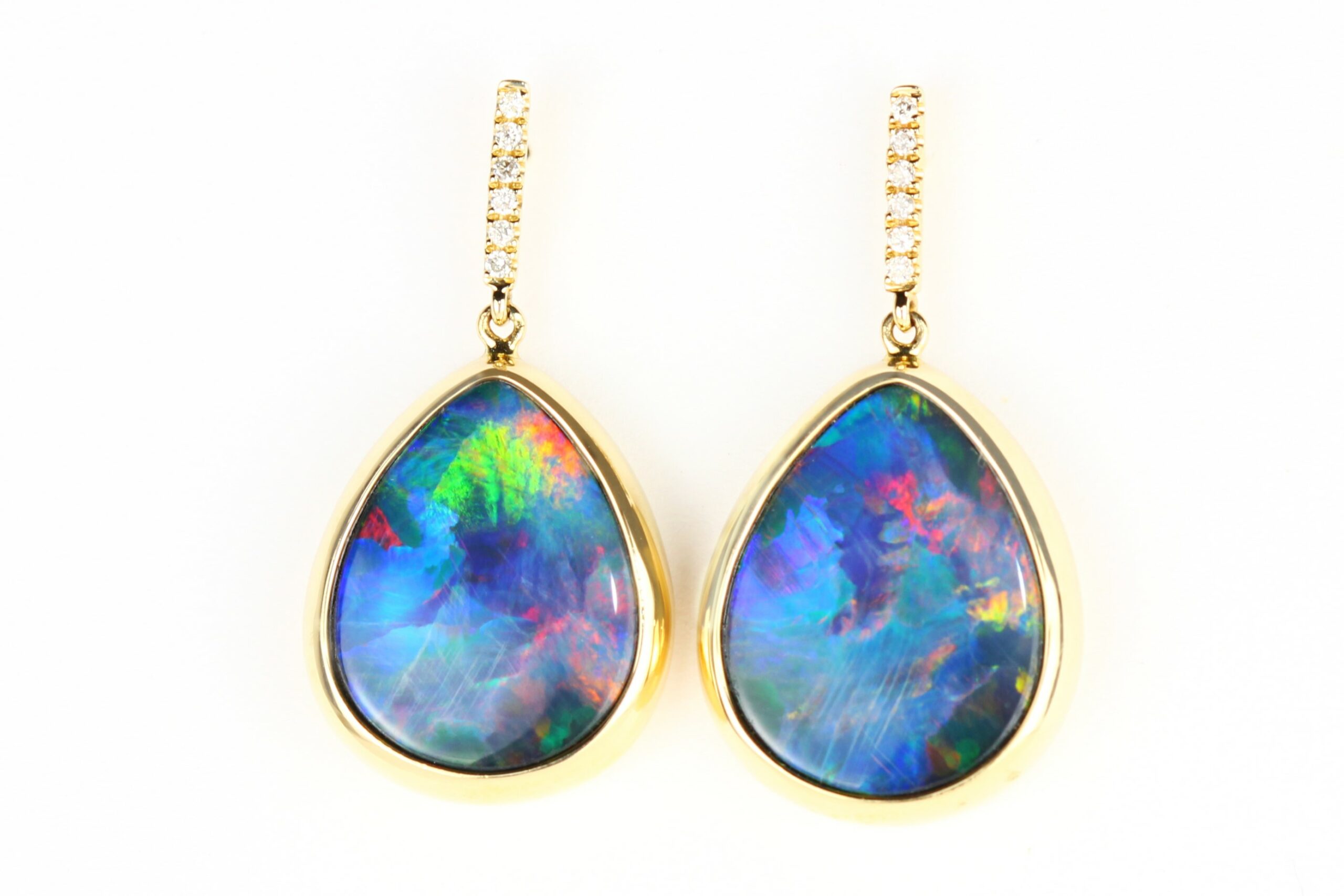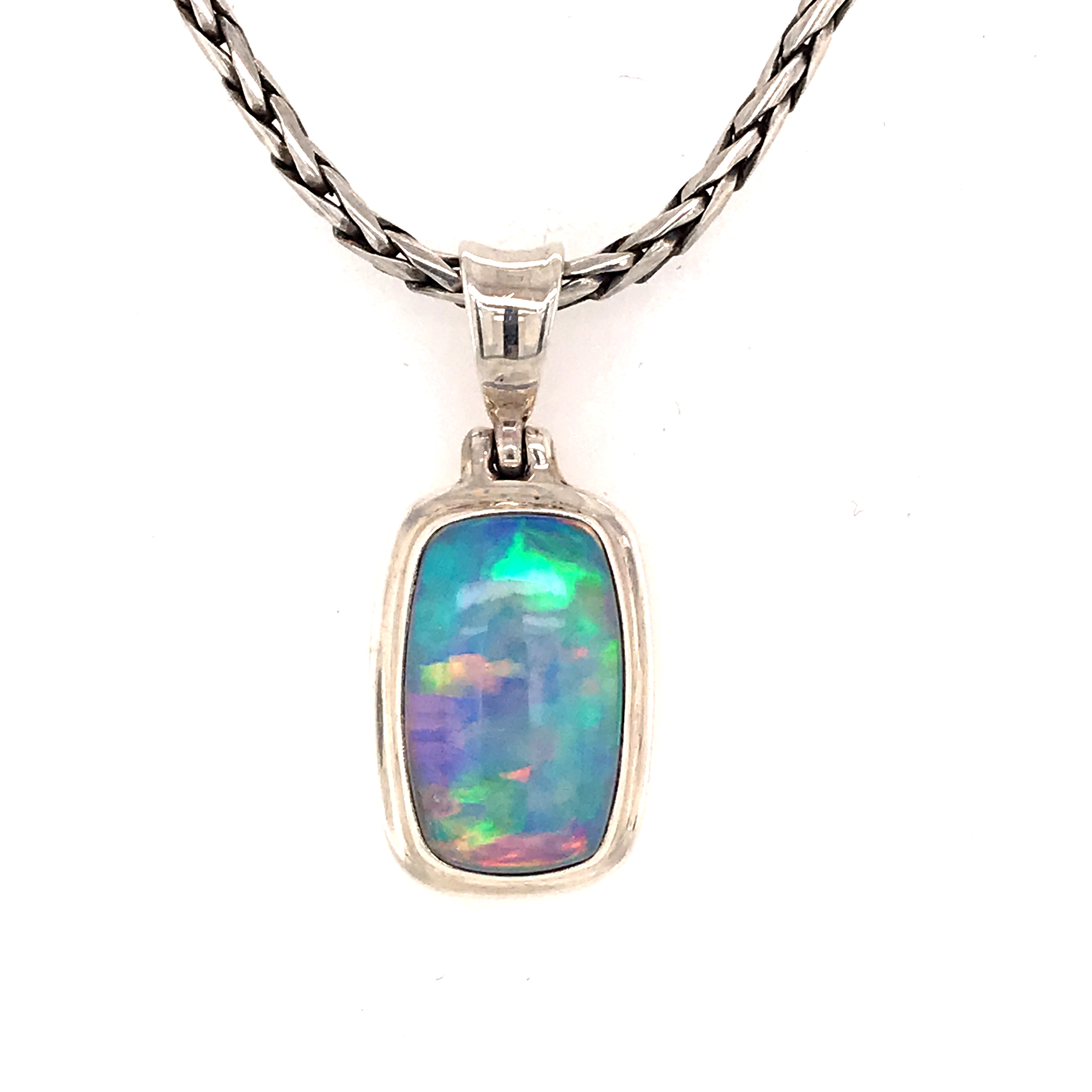
Opal Buying Guide for Jewelry
One of the world's most sought-after gemstones, opal whose name evolved from the Roman opalus derived from the Greek opallios, meaning "to see a change of color." The Greek word was a modification of the ancient Indian Sanskrit name for Opal, Upala, which meant "precious stone."
Opals are formed by when water seeped into cracks in various rock formations, evaporating away until all that is left is silica gel-like substance which then hardens over millions of years and turns into one form of opal. Opal has long been regarded as the most beautiful of all gemstones by many, and opal shows off all the colors of a rainbow as you turn or move the gemstone in a phenomenon known as play-of-color.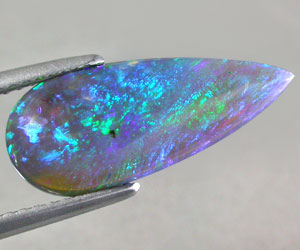
Basic Facts:
Month stone: October
Origin: Australia, Brazil, Ethiopia, Mexico, Peru, South Africa, Sudan, Tanzania & Zimbabwe
Colors: Various
Family: Opal: SiO2 + H2O
Hardness: 5.5 - 6.5
Refractive Index: 1.37 – 1.52
Specific Gravity: 1.98 – 2.50
Treatment: Can be treated
Types of Opal
There are a number of different types of opal available so it is good to be familiar with the main types before you make your purchasing decision.
Black Opal
Black opal is found mainly at Lightning Ridge in New South Wales, Australia. Known as the "King of Opals," Lightning Ridge black opal has been sought after since its discovery in 1902. About 90 miles north of Sydney is Lightning Ridge (a town of about 15,000 people) which is the world's largest source of the finest black opals.
This magnificent gemstone is the most sought after form of opal. Its dark background color sets spectral colors on fire much like a storm cloud behind a rainbow (the black background provides contrast and intensity to this opal's color spectacle). So valued is black opal that even very thin slices are made into duplicates or triplets to give them enough strength and depth to be included in gold rings and other jewelry.
The black opal mining within the Lightning Ridge and the majority of Australia's opal fields lie in a geological phenomenon known as the Great Australian Basin. The basin was formed from the sediments of a large inland sea that existed over 140 million years ago. About 120 million years later, sandstones have been deposited by watercourses over the top of these sedimentary rocks. Their silica is filtered down to cavities in the older bedrock in the form of a gel. The silica hardened and formed around a nucleus, creating the opal's characteristic regular spheres and cavities. It is the diffraction of light through these transparent surfaces that produces the opal brilliant play of color.
Unfortunately, all Australian opals are becoming increasingly rare, especially those from Lightning Ridge. The old fields on Lightning Ridge that yielded large cabochon stones are nearly exhausted, with only marginal areas currently being worked. Although the government has opened many new prospective areas, there have been no significant new deposits to date. Opal production at Lightning Ridge is half of what it was ten years ago.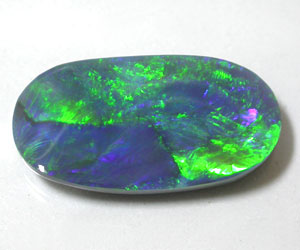
Boulder Opal
Boulder opal is found sparsely distributed over a large area of Australian ironstone or boulder country where opal (silica mix) fills veins, cracks, cavities and fissures in ironstone boulders. Opal boulder stone is always ground to include the brown host stone. One of the largest boulder opal areas is located northwest of Lightning Ridge in western Queensland. The Queensland Boulder Opal areas comprise a large area centered on the town of Quilpie and extend as far north as Winton and south to Cunamulla.
Known for its vivid flaming clear rich colors, this variety is in very high demand and very popular. Interest in Queensland Boulder Opal has increased significantly over the past 20 years.
Fire Opal
Fire opals are aptly named for their fiery cherries, yellow tans and deep tangerines. Unique and mysterious, fire opal is remarkable in that, unlike many other opals, its color play is minimal. Also known as Mexican opal, Mexican fire opal, Tanzanian fire opal, cherry fire opal, Ethiopian fire opal, Brazilian fire opal or sun opal, the legendary popularity of the place comes from its breathtaking brilliance, opalescence, extraordinary fiery hues and amazing clarity.
Fire opals have been highly valued in America and the Aztec Indians called this stone Quetzalitzlipyollitili or ;gemstone of the bird of paradise;. For the Aztec Indians, the fire opal was a strong symbol of love and lust. While fire opal is mainly found in Mexico (and sometimes Australia), this gemstone has recently been found in Tanzania, Ethiopia, Mali and now Brazil. While opal has been mined in Brazil since about 1945, production has always been very limited, making it difficult to secure commercial quantities. Today the Piaui state is increasingly internationally recognized for its opals with their quality comparing favorably with all the finest Australian opals.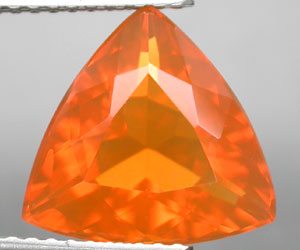
Green Opal
Discovered in the 1960s, green opal is a green translucent opal that resembles chrysoprase or jade and is commonly called PRASEM opal or chrysopal due to its resemblance to chrysoprase. It is mined in the Arusha region of Tanzania (the same region as tanzanite). Although this gemstone does not show the same color play found in some opals, its mint to apple green color has made it a very popular opal for jewelry. Trace amounts of nickel give this opal its unique color.
Jelly Opal
Jelly opal (also known as water opal or crystal opal) is mined in Mexico and Australia. Offering an attractive mix of indistinct colors, it is a transparent pure opal with a gelatinous appearance and sometimes pronounced opalescence (bluish sheen). The play of color is a subtle luster that dances across the entire stone rather than distinct color fields. When held in direct light, a jelly opal can display some of the most intense opal colors.
Peruvian Opal
It comes from the Andes and was appreciated by the ancient Inca Indians. Peruvian opal is extremely rare and exhibits an exquisite translucent color. Although normally found in blue or pink colors (also sometimes green).
Semi Black Opal
With a lighter transparency than black opal, semi black opal has a color darker than black, but not quite black. Opacity is the key that differentiates black from semi black with black opal appearing more opaque than semi black opal. Semi black opal was discovered at Andamooka in the 1930s. Located 40 miles north by road from Adelaide, South Australia, Andamooka is a typical dusty "Wild West" desert town. While Andamooka opals are still world famous, only a small amount of opal is mined from Andamooka due to high logistical costs due to its remoteness. Andamooka opal is typically of exceptionally high quality, but has become more difficult to purchase in recent years.
White Opal
White opal is transparent with a creamy appearance that dominates broken colors. While all of the Australian opal fields produce white opal, the majority is found in Coober Pedy.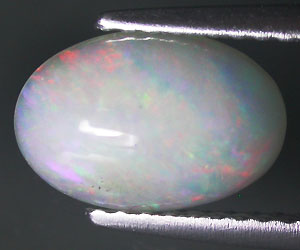
Opal for Jewelry
Gemsheaven offers a jewelry design service at a very affordable cost. Click here for more information.
Opal is one of the most popular gemstones for jewelry and it is suitable for every type of design such as engagement ring, wedding ring, pendant, solitair, pendant, earring, broaches, cocktail ring, bracelet and others. As opal often have a unique shape it makes a perfect gem for very individual jewelry designs.
Opal Color:
The body color and tone of an opal are very important factors that affect its beauty and value. The darker the tone combined with a strong play of color, the more attractive the gem is. As discussed above, there are many types of opals and for example fire opals have a uniformed fiery orange/red color and you want the color to be even. 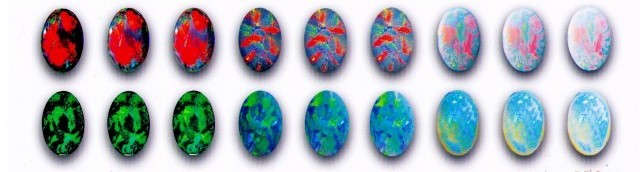
Opal Clarity:
Opals tend to be categorized as having transparent, translucent or opaque clarity. You can expect some form of inclusion/imperfections in an opal and this actually adds to the uniqueness of the stone. The exception of this is fire opal for which you want to have as transparent/clear stone as possible.
Opal Cut/Shapes:
The most important thing in an opal is the play of color. This therefore has a big influence as to the shape of the gem and you often see opals with asymmetrical shapes. Opals is however cut into all the standard shapes such as oval, round, pear, trilliant and more if possible. Fire opals are also usually cut into the standard shapes.
With opals having such a wide range of shapes it really gives the jeweler enormous creative freedom to design a unique piece of opal jewelry. Opals are often set into pendant, earrings and single stone rings. 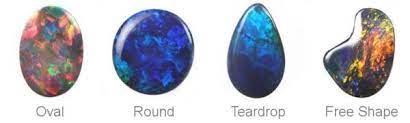
Opal Weight:
In general, with any colored gemstone; the bigger the stone, the higher the price. This is however not always the case with opals as the most important thing is the play of color. You can have a stunning 1 carat black opal that is worth a hundred times more than a 50 carat boulder opal.
Opal Treatment:
The vast majority of opals are not treated in any way. There are however some instances where a stone is treated and these treatments are:
# Doublet or triplet opals – This treatment involves slicing a small piece of precious opal and then glue this to a black backing. This technique is used frequently with rare opal to produce larger and stronger pieces at a lower cost.
# Heat treatment – This treatment often involves soaking an opal in a hot 50% sugary water solution for 6 to 9 hours. The gem is then heated up to around 250 degrees Celsius for 4-6 hours. As with all gemstone treatments, any reputable seller should fully disclose any type of treatment done.
Opal Price:
As mentioned, price of opals depends on the opal type and very much on the play of color.
It is very difficult to give exact price ranges as this varies on an ongoing basis and also depends on a range of factors, but a general guide is as follows:
Natural black opals:
1 carat - $100 - $5,000 per carat
Natural boulder opals:
1 carat - $10 - $300 per carat
Natural fire opals:
1 carat - $20 - $200 per carat
Natural jelly opals:
1 carat - $50 - $1,000 per carat
Natural Peruvian opals:
1 carat - $20 - $100 per carat
Natural semi black opals:
1 carat - $50 - $1,000 per carat
Opal Hardness:
Opal is a durable stone with a hardness of 5.5 – 6.5 on Mohs hardness scale. Opal has a hardness less than for example ruby and sapphire so it is often set in more protective type of settings such as bezel setting.
Opal Birthstone:
Opal is the birthstone of Ocober and makes a perfect gift for anyone celebrating a birthday in that month. 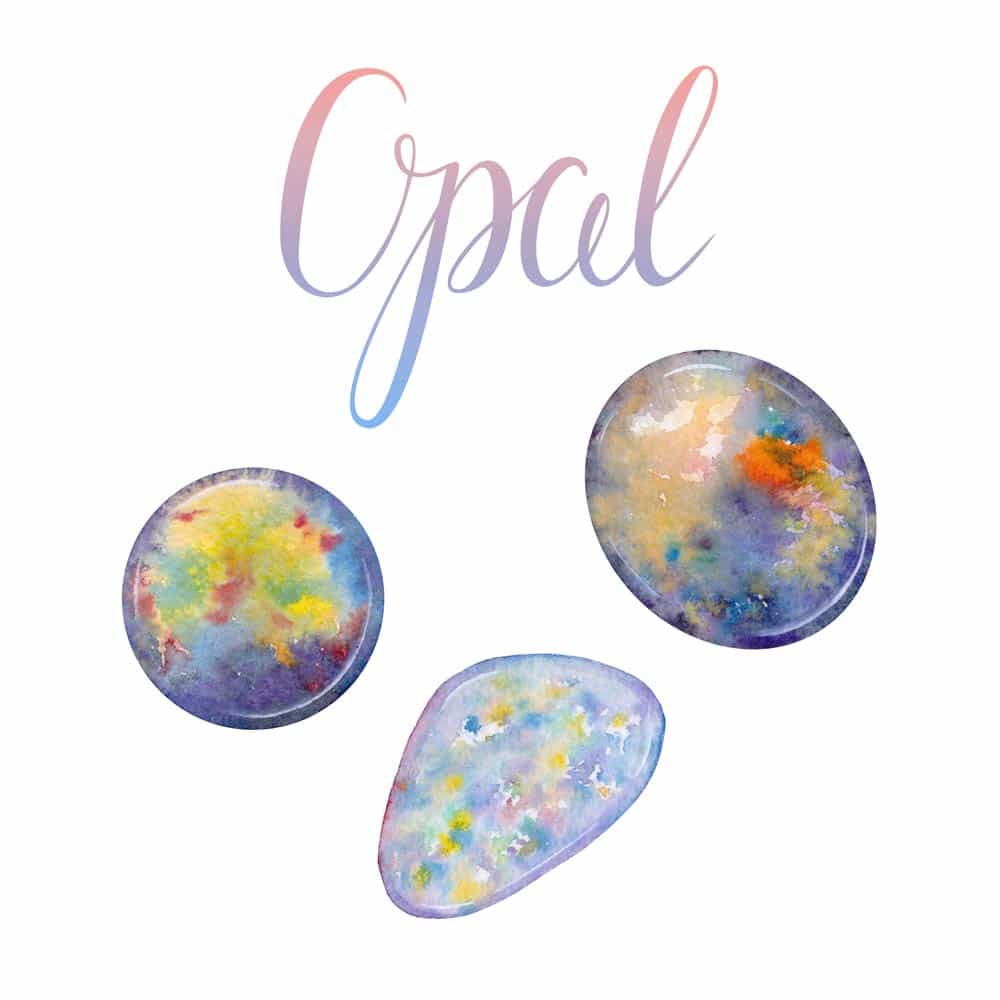
Opal Zodiac Stone:
Opal is most suitable for people sharing the Zodiac sign Libra, September 22 – October 23.
Opal Anniversary Stone:
Opal is the traditional gemstone gift for the 14th wedding anniversaries.
Which Jewelry Type fits Opal?
Pendants, earrings and necklaces also have less chance of being 'knocked about' so make a good pick for opal gems. Opal has also become very popular as an alternative wedding ring stone instead traditional diamond. 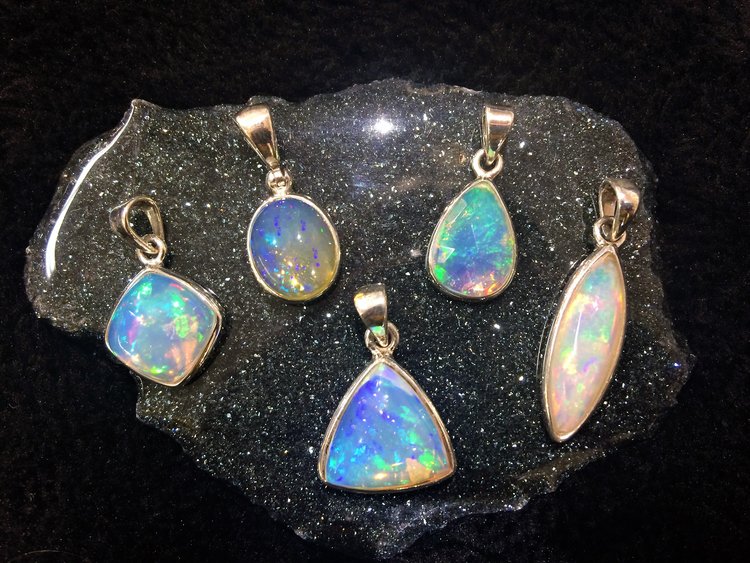
What metal is best for Opal?
Opals come in all type of colors so the type of metal used is really an individual preference.
Silver is an incredibly popular metal for opal gems as it both compliments the color play, as well as being more affordable than gold. Opal is suitable for all type of silver jewelry such as rings, earrings, pendants, bracelets and more. 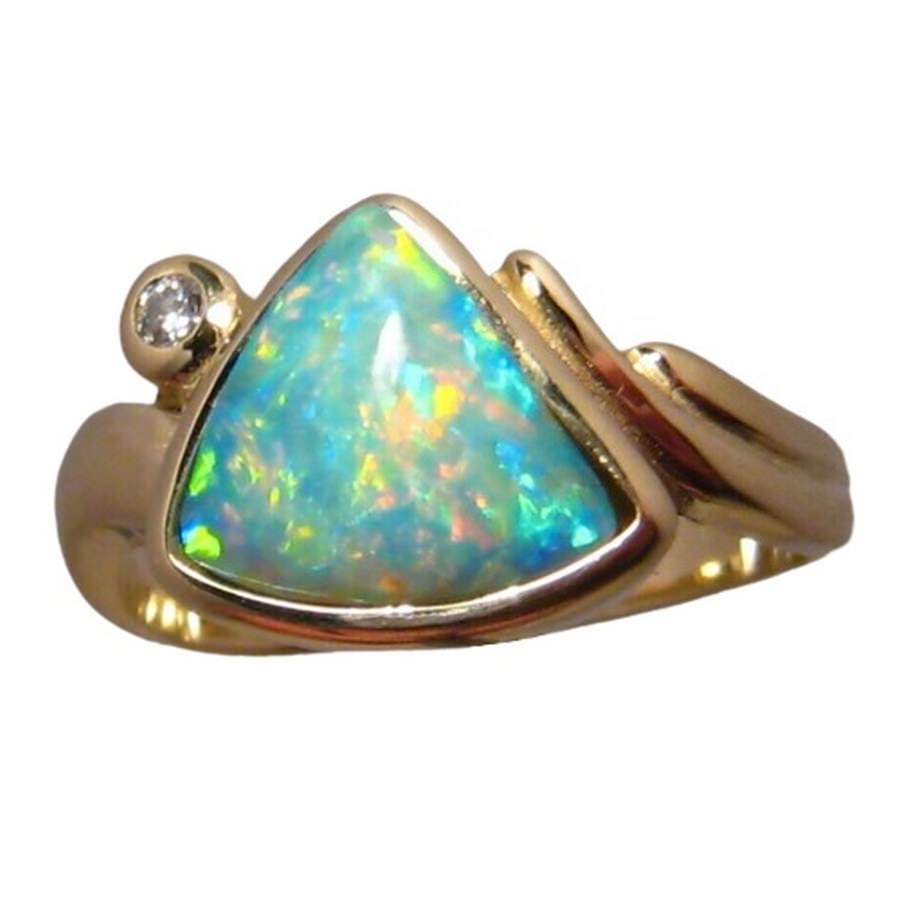
Caring for your Opal Jewelry:
Opal has a hardness of 5.5 – 6.5 on Mohs hardness scale which is relatively soft for a gem but durable enough to survive the odd bump or knock on a hard surface. As with any type of gemstone jewelry proper care should be taken.
Opal can be safely, simply, and effectively cleaned with warm soapy water and a soft brush, such as a toothbrush. Steam cleaners should never be used to clean opals as it could damage the stones.
Opals can contain as much as 20% water so try not to leave opals exposed to long periods in sunlight or a dehumidified room.
In addition to regular cleaning, take extra care while wearing the stone. Avoid bumping or scratching the stone against a rough surface. When storing the opal it is recommended to store them either in separate boxes, or in individual cloth bags.
Summary:
Opal is a great gemstone for any type of jewelry including wedding rings. Opal is available in all type of shapes and colors including very unique patters ensuring that anyone will be able to find a opal of their liking.
Gemsheaven offers a jewelry design service at a very affordable cost. Click here for more information.